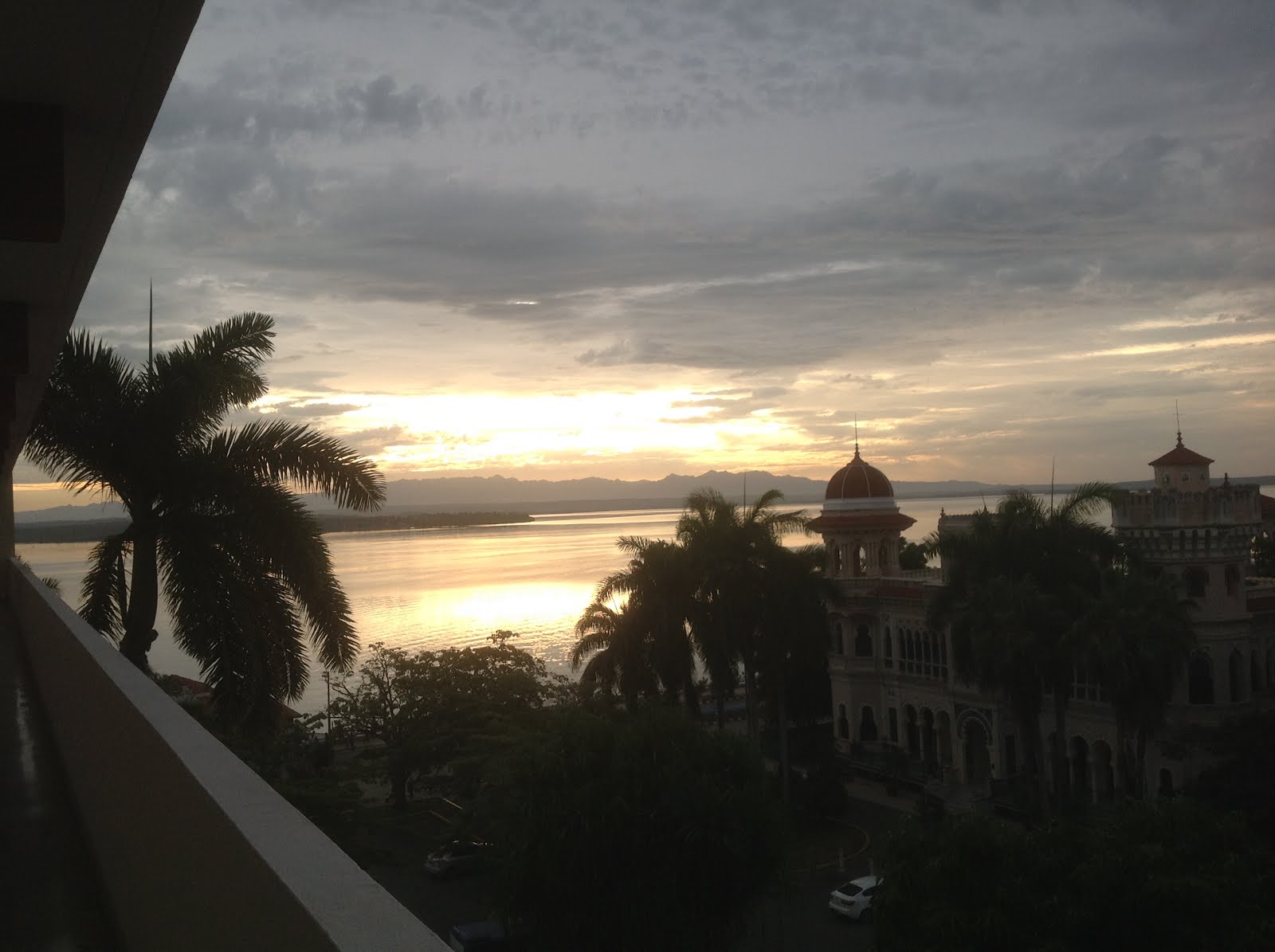
Hvar harbor
Friday, May 20, 2016
Synagogue in Split
I had forgotten to write about our visit to the synagogue in Split. It is not functioning, but acts as a Community Center. It was on the "Jew Street", down an alley and up a set of stairs. There was a plaque commemorating those lost in the Holocaust, consisting of about 80 names.
Wednesday, May 18, 2016
Split to Hvar - Day 9
We spent the morning walking around Split. This is an old Town which got bigger in Roman times. The emperor, Diocletian, made the palace huge with room and more rooms. He live in the 300s. Much of the original structure is still intact. He was buried on the grounds in a large mosaleum, but was subsequently moved when the Christians took over and turned it into a church. They removed much of the inner structures of the palace, and built dwelling spaces. People still live there, but barely. Most of the buildings were nationalized during Tito's time and homeless people moved in. After independence in 1991, these people had basically a "life estate" as the buildings reverted to their former owners. The landlords are now waiting for the tenants to die off.
One of the subterranean rooms was where Daenyris Targaryen kept the dragons in chains. Or at least, where it was filmed.
After the castle, we wandered in the rest of the town. It is quite quaint, and reminded me of the old city in Jerusalem, just less noisy and dirty. Lunch on our own with a quick pizza.
We got on the ferry to Hvar, a 2 hour ride. My seat companions were some Canadians with their dog and cat who were cuddling with each other.
Our hotel here is lovely with a wonderful view of the water. Lavender is everywhere.
We spent the morning walking around Split. This is an old Town which got bigger in Roman times. The emperor, Diocletian, made the palace huge with room and more rooms. He live in the 300s. Much of the original structure is still intact. He was buried on the grounds in a large mosaleum, but was subsequently moved when the Christians took over and turned it into a church. They removed much of the inner structures of the palace, and built dwelling spaces. People still live there, but barely. Most of the buildings were nationalized during Tito's time and homeless people moved in. After independence in 1991, these people had basically a "life estate" as the buildings reverted to their former owners. The landlords are now waiting for the tenants to die off.
One of the subterranean rooms was where Daenyris Targaryen kept the dragons in chains. Or at least, where it was filmed.
After the castle, we wandered in the rest of the town. It is quite quaint, and reminded me of the old city in Jerusalem, just less noisy and dirty. Lunch on our own with a quick pizza.
We got on the ferry to Hvar, a 2 hour ride. My seat companions were some Canadians with their dog and cat who were cuddling with each other.
Our hotel here is lovely with a wonderful view of the water. Lavender is everywhere.
Moving South - Day 8
A long bus ride coming off the Itrian peninsula, coming down the mainland coast. Long, as in 3 hours. Yes, Paul, that is nothing to you.
We came to the Plitvice Lakes National Park. This is a series of lakes and waterfalls which we hiked and hiked and hiked. The course was about 4 miles along the rivers and waterfalls. We were walking on a wooden path next to, across, and over the falls. I was reminded of Myst. It was actually pretty spectacular, but there were no guide rails or protection, and I was concerned about falling from the narrow path, especially when a bunch of teenagers were coming the opposite direction. Luckily, there were no mishaps. But, as we were about to complete our trek back to our starting point, the path was flooded from all the recent rains, and we had to retrace our steps. Once we got back, we were on a boat to another falls, but there was more hiking up about 100 meters up the hill. No chest pain, but I was huffing pretty hard. Ann had no problems, though, even with her hips or back. My back was talking to me, but I tried not to listen.
And that was the day. Another 3 hours on the bus to Trogir which isn't too far from Split, where we spend tomorrow.
A long bus ride coming off the Itrian peninsula, coming down the mainland coast. Long, as in 3 hours. Yes, Paul, that is nothing to you.
We came to the Plitvice Lakes National Park. This is a series of lakes and waterfalls which we hiked and hiked and hiked. The course was about 4 miles along the rivers and waterfalls. We were walking on a wooden path next to, across, and over the falls. I was reminded of Myst. It was actually pretty spectacular, but there were no guide rails or protection, and I was concerned about falling from the narrow path, especially when a bunch of teenagers were coming the opposite direction. Luckily, there were no mishaps. But, as we were about to complete our trek back to our starting point, the path was flooded from all the recent rains, and we had to retrace our steps. Once we got back, we were on a boat to another falls, but there was more hiking up about 100 meters up the hill. No chest pain, but I was huffing pretty hard. Ann had no problems, though, even with her hips or back. My back was talking to me, but I tried not to listen.
And that was the day. Another 3 hours on the bus to Trogir which isn't too far from Split, where we spend tomorrow.
Tuesday, May 17, 2016
Wandering -Day 7
Wandering -Day 7
We went to a little town, Moscenice, up on top of one of the local mountains. This was a medieval little town with 3 foot wide streets, and houses on top of each other. Cute and quaint. We saw how they used to press the olives for oil, and the differences between the "virgin" or first press and the later presses (not with cold press).
Lunch at a very pretty mountaintop restaurant, with a wonderful view. The lunch itself, however, was nowhere near as nice. Strange pasta with a weird sauce, and desert that was a sweet marzipan-like concoction. Totally inedible.
At the bottom of the mountain, they dropped us off to walk the 7 miles back along the coastal path. Took us a while, and we stopped once for gelato. Yes, not much of a day.
Drinks and dinner along the water with 2 couples on the trip. They have known each other from before the trip, and keep everyone in stitches. More gelato after dinner (why not?).
We went to a little town, Moscenice, up on top of one of the local mountains. This was a medieval little town with 3 foot wide streets, and houses on top of each other. Cute and quaint. We saw how they used to press the olives for oil, and the differences between the "virgin" or first press and the later presses (not with cold press).
Lunch at a very pretty mountaintop restaurant, with a wonderful view. The lunch itself, however, was nowhere near as nice. Strange pasta with a weird sauce, and desert that was a sweet marzipan-like concoction. Totally inedible.
At the bottom of the mountain, they dropped us off to walk the 7 miles back along the coastal path. Took us a while, and we stopped once for gelato. Yes, not much of a day.
Drinks and dinner along the water with 2 couples on the trip. They have known each other from before the trip, and keep everyone in stitches. More gelato after dinner (why not?).
Monday, May 16, 2016
The Istrian Peninsula - Day 6
We started the day in the mist. The bus climbed put the mountain behind us in Opatija and then through a 3 1/2 mile tunnel. On the other side, the weather had changed, and it was much brighter. Not sunny (yet) but looking up.
We made our way to the bottom of the Istrian peninsula which separates the Kvarner Bay from the Adriatic. This town, Pula, was an old town, but was at its height in Roman times. There is a fairly well preserved amphitheater with essentially the entire outer wall still intact. We walked in and there was some ceremony for a international youth soccer tournament. Noisy, but we could mostly hear our guide, Sondra, with our portable earpieces. Underneath, there was an exhibit of olive pressing and old amphora, which was interesting. There was a reproduction of an old roman map of the area, showing the distances not in miles or kilometers, but in days of travel. Interesting that Venice was not on the map, but it wasn't founded until about 400AD.
Then up the western coast to Rovinj, a pretty old fishing town with windy small streets leading to the church at the top of the hill. Think Montmartre, but smaller. Multiple little art shops and restaurants.
Most of the afternoon was spent wandering Ravinj, then back to Opatija for a nice dinner at a local restaurant. Ann had grilled "fish of the day", I had roast lamb. Somewhat more importantly, they gave us some wonderful olive oil to go with the salad and bread.
Ann's Notes
Travel for me is a lesson in geography and this trip is no exception. I actually had no idea how close Trieste and Venice are to the coast of Croatia and the Istrian Peninsula. Opatija, which is on east coast of the peninsula is 2 1/2 hours from Trieste and 5 hours from Venice. I did some quick research last night to see if we could escape for a day or so to either, but alas it would not work out. But the rest of our trip traveling down the coast of Croatia and finishing up in Dubrovnik should be great. And the weather may even cooperate a bit more.
Delicious lunch of pizza and salad in one of the cafe's in Rovinj. Being so close to Italy really does mean delicious pizza and gelato everywhere. And then a good dinner in a restaurant in Opatija of fried calamari and a local white fish, with delicious garlic spinach and roasted potatoes. The pastries, chocolate mousse cakes and chocolate is also quite good here.
We started the day in the mist. The bus climbed put the mountain behind us in Opatija and then through a 3 1/2 mile tunnel. On the other side, the weather had changed, and it was much brighter. Not sunny (yet) but looking up.
We made our way to the bottom of the Istrian peninsula which separates the Kvarner Bay from the Adriatic. This town, Pula, was an old town, but was at its height in Roman times. There is a fairly well preserved amphitheater with essentially the entire outer wall still intact. We walked in and there was some ceremony for a international youth soccer tournament. Noisy, but we could mostly hear our guide, Sondra, with our portable earpieces. Underneath, there was an exhibit of olive pressing and old amphora, which was interesting. There was a reproduction of an old roman map of the area, showing the distances not in miles or kilometers, but in days of travel. Interesting that Venice was not on the map, but it wasn't founded until about 400AD.
Then up the western coast to Rovinj, a pretty old fishing town with windy small streets leading to the church at the top of the hill. Think Montmartre, but smaller. Multiple little art shops and restaurants.
Most of the afternoon was spent wandering Ravinj, then back to Opatija for a nice dinner at a local restaurant. Ann had grilled "fish of the day", I had roast lamb. Somewhat more importantly, they gave us some wonderful olive oil to go with the salad and bread.
Ann's Notes
Travel for me is a lesson in geography and this trip is no exception. I actually had no idea how close Trieste and Venice are to the coast of Croatia and the Istrian Peninsula. Opatija, which is on east coast of the peninsula is 2 1/2 hours from Trieste and 5 hours from Venice. I did some quick research last night to see if we could escape for a day or so to either, but alas it would not work out. But the rest of our trip traveling down the coast of Croatia and finishing up in Dubrovnik should be great. And the weather may even cooperate a bit more.
Delicious lunch of pizza and salad in one of the cafe's in Rovinj. Being so close to Italy really does mean delicious pizza and gelato everywhere. And then a good dinner in a restaurant in Opatija of fried calamari and a local white fish, with delicious garlic spinach and roasted potatoes. The pastries, chocolate mousse cakes and chocolate is also quite good here.
Saturday, May 14, 2016
Back to Croatia - Opatija - Day 5
Up and out in the morning and drove about an hour to the Postojna cave. This is a cool cave where the remnants of the Ljubljana river dives into the rock to cut a channel. We took a little tram about a mile in, and began to walk. Never having been to Luray, this was quite impressive to me. The caverns were huge and the thousands of stalactites and stalagmites were very cool. The lights inside were strategically placed to highlight them well. We walked for about an hour. I took a bunch of pictures that I hope will come out, since I was pushing the ISO and speed to the limits of my camera. No tripods or flash allowed.
After lunch at the cafeteria, we went back across the border to Croatia. We got to the little town of Opatija which is not exactly a resort, but more of a spa town. The Austrians would come here for the air and the exercise of walking. We are doing a bunch of that. Luckily, the rain has mostly stopped, and we have even seen bits of sunlight! There were Benedictine monks here in the 14th century who set up an abbey. The word "abbey" comes from the name Opatija, which in Croation, means "abbey". The word in Italian is "abezzia". You can see how the etymology works. (Thank you, Bart).
A famous son of Opatija is Leo Sternbach, who invented benzodiazepines, which gave us Librium, Valium, klonopin, and Dalmane. (Look up "Napoleon's Buttons: 17 Chemicals That Changed History") We are having problems now with the misuse of "benzos", but it was really an important discovery. Also, a famous surgeon, Theodor Billroth, spent time here and died here. My surgical buddies will certainly know that name.
We spent the afternoon walking around the town and through the large Angiolina Park in the center. Lots of different plants and trees, including Sequoias. Down by the water is a statue of the "Maiden with Seagull". This was a replacement for a Madonna that was torn down by the Communists in the 50s. They are trying to promote this like the Little Mermaid of Copenhagen. The problem is you can't get quite so close, and the girl faces the sea rather than the shore where you can see her better. Nice try.
Dinner at the hotel and another walk by the water, and I'm pooped.
Ann's additions:
Even though I visited Lurray caverns years ago on a school field trip with Harry, I was equally impressed with the Postojna caves. But I was also impressed today with some of the recent history we learned about Slovenia and Croatia. Slovenia became a member of the EU in 2004, but thanks to Slovenia's efforts to block Croatia's entry into the EU, Croatia did not become a member until 2013. Although the Slovenian and Croatian people generally like each other, as we learned from our tour leader today and vacation in each other's countries, they are not always in sync politically. The major reason Slovenia blocked Croatia's EU entry is that Slovenia needs access through Croatia to make full use of its coast. It took years for the two countries to reach agreement on this issue and when they finally did, Croatia modified its opposition to Slovenia's EU entry. Not surprisingly, Slovenia, as a long time EU member uses the Euro. Croatia is not yet on the Euro and still uses the kuna.
Although our tour leader told us that the immigrant crisis was not really affecting Croatia because the immigrants weren't coming to this country, recent news reports tell a different story. In February 2016, Slovenia, Croatia, Serbia and Macedonia all announced that they would each restrict the number of immigrants entering their countries to 580 a day. Their announcement followed Austria's clampdown on immigration.
Up and out in the morning and drove about an hour to the Postojna cave. This is a cool cave where the remnants of the Ljubljana river dives into the rock to cut a channel. We took a little tram about a mile in, and began to walk. Never having been to Luray, this was quite impressive to me. The caverns were huge and the thousands of stalactites and stalagmites were very cool. The lights inside were strategically placed to highlight them well. We walked for about an hour. I took a bunch of pictures that I hope will come out, since I was pushing the ISO and speed to the limits of my camera. No tripods or flash allowed.
After lunch at the cafeteria, we went back across the border to Croatia. We got to the little town of Opatija which is not exactly a resort, but more of a spa town. The Austrians would come here for the air and the exercise of walking. We are doing a bunch of that. Luckily, the rain has mostly stopped, and we have even seen bits of sunlight! There were Benedictine monks here in the 14th century who set up an abbey. The word "abbey" comes from the name Opatija, which in Croation, means "abbey". The word in Italian is "abezzia". You can see how the etymology works. (Thank you, Bart).
A famous son of Opatija is Leo Sternbach, who invented benzodiazepines, which gave us Librium, Valium, klonopin, and Dalmane. (Look up "Napoleon's Buttons: 17 Chemicals That Changed History") We are having problems now with the misuse of "benzos", but it was really an important discovery. Also, a famous surgeon, Theodor Billroth, spent time here and died here. My surgical buddies will certainly know that name.
We spent the afternoon walking around the town and through the large Angiolina Park in the center. Lots of different plants and trees, including Sequoias. Down by the water is a statue of the "Maiden with Seagull". This was a replacement for a Madonna that was torn down by the Communists in the 50s. They are trying to promote this like the Little Mermaid of Copenhagen. The problem is you can't get quite so close, and the girl faces the sea rather than the shore where you can see her better. Nice try.
Dinner at the hotel and another walk by the water, and I'm pooped.
Ann's additions:
Even though I visited Lurray caverns years ago on a school field trip with Harry, I was equally impressed with the Postojna caves. But I was also impressed today with some of the recent history we learned about Slovenia and Croatia. Slovenia became a member of the EU in 2004, but thanks to Slovenia's efforts to block Croatia's entry into the EU, Croatia did not become a member until 2013. Although the Slovenian and Croatian people generally like each other, as we learned from our tour leader today and vacation in each other's countries, they are not always in sync politically. The major reason Slovenia blocked Croatia's EU entry is that Slovenia needs access through Croatia to make full use of its coast. It took years for the two countries to reach agreement on this issue and when they finally did, Croatia modified its opposition to Slovenia's EU entry. Not surprisingly, Slovenia, as a long time EU member uses the Euro. Croatia is not yet on the Euro and still uses the kuna.
Although our tour leader told us that the immigrant crisis was not really affecting Croatia because the immigrants weren't coming to this country, recent news reports tell a different story. In February 2016, Slovenia, Croatia, Serbia and Macedonia all announced that they would each restrict the number of immigrants entering their countries to 580 a day. Their announcement followed Austria's clampdown on immigration.
Friday, May 13, 2016
Eagle cam
I gotta say, even half way around the world, I am enthralled by the DC baby eagles.
WWW.DCEagleCam.org
A Day in Ljubljana - Day 4
A lazy morning with a late start at 9:30 for a walking tour of this cute little city. Of course, it is gray and threatening rain again.
The architecture here is relatively modern for Europe, as there was a large earthquake in 1895 which destroyed most of the town, and it was rebuilt in the early 20th century with an art nouveau theme. The name is thought to come from early Slovene "to love" as it is a lovely town. They are proud that Slovenia has "love" in it. There is a high mountain in the center with a castle dating to early Roman times. There have been many conquerors, from the Romans to the Huns to the Magyars to the Venetians to the Hapsburgs. This is on a trade route between Europe and Asia so everyone came through here.
There is a river running through the center of the old town with multiple bridges. The whole center is for pedestrians which is nice. There is the famous Triple Bridge which was originally a car bridge with two pedestrian bridges on either side(now all pedestrian), The Dragon Bridge, and others. The dragon is the symbol of the town, and there are dragons everywhere. The old Jewish quarter is still there, but most of the Jews were expelled in the 1500s. Our guide reported that the Jews had been invited to the city from Trieste in Northern Italy because the town was expanding rapidly and needed money lenders. She went on to say that they charged too much interest and so they did not remain welcome here for very long. Nevertheless, there is still a street called Zidovska Steza which translates as "Jew Street".
In the market square, along with the fresh fruits and vegetables, there was a "milkomat" machine which would dispense fresh milk into your bottle. There was also a cheese machine. Coming to a mall near you???
We took the funicular to the top to explore the castle. They have some excavations which were interesting. The rain stopped us from roaming too much. The view from the top was nice.
We walked down a steep and narrow and wet path (when we could have taken the funicular) back into the town. We found a restaurant just as the skies opened up again. I had John Dory fish, which I later found out was St. Peter's fish. Very nice. Ann had a salad with all kinds of grilled shellfish which was delicious.
Did a little shopping and rested at the hotel.
We met the group at 5 for a boat ride along the river, and to see the bridges. Of course, it rained, but the boat was <mostly> covered...
Dinner at a little restaurant we found along the river, with Vicki and Erika, cousins on our trip. Ann's seafood barley risotto was very good; my grilled tuna salad was only fair.
We walked around a bit now that the skies had dried up for a while, and saw that the castle was lit in green. Ljubljana has been designated a "green" city for its efficient use of energy, so there is lots that is green. To be sure, the city flag is green and white, so I am not sure that was completely the reason.
In a side square was a huge crane with a hanging restaurant. For €89, you could have dinner 300 feet in the air. You have to be strapped in, and you a hanging there with nothing under you. I'm not sure I would want to try.
Tomorrow to the caves, and back to Croatia.
Ann's additions:
I must admit that before arriving in Slovenia, I knew very little about this country other than it had been part of the former Yugoslavia. So, here are some interesting tidbits I have picked up.
Slovenia is a country of approx 2 million people, 280,000 of which live in Ljubljana. The country is bordered by Italy to the north west, Austria to the north, Hungary to the east and Croatia to the south, with the longest border. Slovenia was the first republic to declare its independence from Yugoslavia followed by Croatia. And compared to what happened in Bosnia, Serbia and Kosovo, Slovenia and Croatia had a relatively easy path to independence.
Like Croatia, higher education in Slovenia is free, with 55,000 students attending the university of Ljubljana. Medical care is also provided to all residents. Taxes to support the universal health care and education are high with income taxes beginning at 35% and reaching as high as 50%.
Stephen J. Rockower, MD
A lazy morning with a late start at 9:30 for a walking tour of this cute little city. Of course, it is gray and threatening rain again.
The architecture here is relatively modern for Europe, as there was a large earthquake in 1895 which destroyed most of the town, and it was rebuilt in the early 20th century with an art nouveau theme. The name is thought to come from early Slovene "to love" as it is a lovely town. They are proud that Slovenia has "love" in it. There is a high mountain in the center with a castle dating to early Roman times. There have been many conquerors, from the Romans to the Huns to the Magyars to the Venetians to the Hapsburgs. This is on a trade route between Europe and Asia so everyone came through here.
There is a river running through the center of the old town with multiple bridges. The whole center is for pedestrians which is nice. There is the famous Triple Bridge which was originally a car bridge with two pedestrian bridges on either side(now all pedestrian), The Dragon Bridge, and others. The dragon is the symbol of the town, and there are dragons everywhere. The old Jewish quarter is still there, but most of the Jews were expelled in the 1500s. Our guide reported that the Jews had been invited to the city from Trieste in Northern Italy because the town was expanding rapidly and needed money lenders. She went on to say that they charged too much interest and so they did not remain welcome here for very long. Nevertheless, there is still a street called Zidovska Steza which translates as "Jew Street".
In the market square, along with the fresh fruits and vegetables, there was a "milkomat" machine which would dispense fresh milk into your bottle. There was also a cheese machine. Coming to a mall near you???
We took the funicular to the top to explore the castle. They have some excavations which were interesting. The rain stopped us from roaming too much. The view from the top was nice.
We walked down a steep and narrow and wet path (when we could have taken the funicular) back into the town. We found a restaurant just as the skies opened up again. I had John Dory fish, which I later found out was St. Peter's fish. Very nice. Ann had a salad with all kinds of grilled shellfish which was delicious.
Did a little shopping and rested at the hotel.
We met the group at 5 for a boat ride along the river, and to see the bridges. Of course, it rained, but the boat was <mostly> covered...
Dinner at a little restaurant we found along the river, with Vicki and Erika, cousins on our trip. Ann's seafood barley risotto was very good; my grilled tuna salad was only fair.
We walked around a bit now that the skies had dried up for a while, and saw that the castle was lit in green. Ljubljana has been designated a "green" city for its efficient use of energy, so there is lots that is green. To be sure, the city flag is green and white, so I am not sure that was completely the reason.
In a side square was a huge crane with a hanging restaurant. For €89, you could have dinner 300 feet in the air. You have to be strapped in, and you a hanging there with nothing under you. I'm not sure I would want to try.
Tomorrow to the caves, and back to Croatia.
Ann's additions:
I must admit that before arriving in Slovenia, I knew very little about this country other than it had been part of the former Yugoslavia. So, here are some interesting tidbits I have picked up.
Slovenia is a country of approx 2 million people, 280,000 of which live in Ljubljana. The country is bordered by Italy to the north west, Austria to the north, Hungary to the east and Croatia to the south, with the longest border. Slovenia was the first republic to declare its independence from Yugoslavia followed by Croatia. And compared to what happened in Bosnia, Serbia and Kosovo, Slovenia and Croatia had a relatively easy path to independence.
Like Croatia, higher education in Slovenia is free, with 55,000 students attending the university of Ljubljana. Medical care is also provided to all residents. Taxes to support the universal health care and education are high with income taxes beginning at 35% and reaching as high as 50%.
Stephen J. Rockower, MD
Thursday, May 12, 2016
Zagreb to Ljubljana -Day 3
On the bus slight late as we misplaced Ann's camera. It had been left under the chair I was sitting in in the lobby of the hotel, but I wasn't aware it was there. Luckily, no harm done.
Half an hour to the border to Slovenia and half an hour wait for border control. Since Croatia is not yet part of the EU, we had to go through the process to get new stamps in the passports. We drove past Ljubljana to get to Bled Castle and Lake. This is a very small country, maybe smaller than New Jersey or Maryland. The land changed to rolling hills and some mountains with valleys between. The weather is gray and intermittent rain, but the mist in the peaks was very pretty, as were the towns between. The lake is a remnant of the ice age from a receding glacier. There is huge outcrop overlooking the lake with a Castle dating to 1011. We drove as high as we could to the entrance, but still had a bunch of hill to climb. We went through the drawbridge gate and had more to climb. Inside, there was a wonderful view of the lake and a small island in it. The castle had a demonstration of printing (with a copy of the first Slovene printed book) and iron working and some old excavations of old jewelry and weapons.
Then to lunch on the shore of the lake. We stopped at a Slovenian restaurant. It was asparagus week and Ann had an asparagus frittata which was quite good. Yes, she even ate eggs!!! I ordered the kasha with mushrooms which was like a kasha rissota. and the waiter nodded approvingly, saying "Very Slovenian". It really was quite good.
After lunch we took a boat to the island to see the old church, dating to the 1600s. The boat was rowed by one of the ancient rowers; the profession passed down from father to son for generations. Think ugly gondolas. More pictures of the mountains and fog. At least it didn't rain while we were on the water or outside(it poured during lunch!).
Back to Ljubljana to check into our hotel. This is a small town, even for a capital. Walking tour tomorrow.
Stephen J. Rockower, MD
President, MedChi 2016-2017
The Maryland State Medical Society
Sent from my iPad
On the bus slight late as we misplaced Ann's camera. It had been left under the chair I was sitting in in the lobby of the hotel, but I wasn't aware it was there. Luckily, no harm done.
Half an hour to the border to Slovenia and half an hour wait for border control. Since Croatia is not yet part of the EU, we had to go through the process to get new stamps in the passports. We drove past Ljubljana to get to Bled Castle and Lake. This is a very small country, maybe smaller than New Jersey or Maryland. The land changed to rolling hills and some mountains with valleys between. The weather is gray and intermittent rain, but the mist in the peaks was very pretty, as were the towns between. The lake is a remnant of the ice age from a receding glacier. There is huge outcrop overlooking the lake with a Castle dating to 1011. We drove as high as we could to the entrance, but still had a bunch of hill to climb. We went through the drawbridge gate and had more to climb. Inside, there was a wonderful view of the lake and a small island in it. The castle had a demonstration of printing (with a copy of the first Slovene printed book) and iron working and some old excavations of old jewelry and weapons.
Then to lunch on the shore of the lake. We stopped at a Slovenian restaurant. It was asparagus week and Ann had an asparagus frittata which was quite good. Yes, she even ate eggs!!! I ordered the kasha with mushrooms which was like a kasha rissota. and the waiter nodded approvingly, saying "Very Slovenian". It really was quite good.
After lunch we took a boat to the island to see the old church, dating to the 1600s. The boat was rowed by one of the ancient rowers; the profession passed down from father to son for generations. Think ugly gondolas. More pictures of the mountains and fog. At least it didn't rain while we were on the water or outside(it poured during lunch!).
Back to Ljubljana to check into our hotel. This is a small town, even for a capital. Walking tour tomorrow.
Stephen J. Rockower, MD
President, MedChi 2016-2017
The Maryland State Medical Society
Sent from my iPad
Wednesday, May 11, 2016
Zagreb City Tour - Day 2
Nice breakfast in the hotel with lots of choices. They even had smoked salmon but, alas, no bagels.
We got into the bus to tour the city. As I previously said, the downtown is largely early 20th century middle European city, looking like a mini Prague, but not as pretty. The main square near our hotel has a statue of Tomislav, the first King of Croatia in 925. Over the next few centuries, they gradually became subjected to the Venetians, the Ottomans, The Ottomans, the Soviets, etc until they became a free country again in 1990.
We saw numerous government buildings, and wound up at a major cemetery, Mirogoj, designed by Hermann Bolle in1876. This was interesting in how the entrance gates and close in edifices were designed. Behind the main church was the tomb of Franco Tudman, the first president in the 90s after independence.
From there, we went back to downtown, to see the Church of Saint Mark with a very distinctive roof, and the Cathedral. We walked around a bit and came upon an apothecary store dating to the 13th century. It is thought that Dante's grandson was an original proprietor.
We broke for lunch and got something at one of the numerous street restaurants. After lunch we were on our own and went to the Museum of Broken Relationships. Very weird, chronicling people's views after breakups and other partings. Anyone can contribute an item with a story. Keys to an ex-lover's car, police reports of a rape, suicide notes, an ax used to break the furniture of a lover who moved out. I was glad I'm still with my first wife and didn't have anything to contribute.
Dinner down the street at a tourist/tour bus restaurant. Very mediocre. Salad with a slab of beef over it(?). Turkey, ham and cheese fried in a thick batter. Nondescript cake for desert. The best part was when we ordered decaf coffee afterwards and had repeated to us "coffee without coffee"!!!
Tomorrow we go to Slovenia and wind up in Ljubljana.
Thoughts on Zagreb: a nice enough city but when the cemetery is the high point of the tour, one has to wonder.
Ann's thoughts on our day in Zagreb
The local guide on our morning tour was very good, his command of English impressive. He had studied at the Zagreb University which, as he explained, was very affordable. A year of tuition, room and board costs about what a meal plan costs at a US college or university -about $1200 a year!
I guess Steve didn't think much of the gyro he had for lunch but the pizza and caprice salad I shared with the two tour members we ate with was delicious. I do agree, though, that dinner was pretty lame.
One thing that really put our day in Zagreb in perspective for me was the conversation we had at breakfast with a couple from Australia who had begun their Croatia trip in Dubrovnik and were ending it in Zagreb, the opposite of what we are doing. They explained that Slovenia and the Dalmation Coast we will be traveling too is absolutely breathtaking and a whole lot more interesting than Zagreb. On to those sites from here!
Nice breakfast in the hotel with lots of choices. They even had smoked salmon but, alas, no bagels.
We got into the bus to tour the city. As I previously said, the downtown is largely early 20th century middle European city, looking like a mini Prague, but not as pretty. The main square near our hotel has a statue of Tomislav, the first King of Croatia in 925. Over the next few centuries, they gradually became subjected to the Venetians, the Ottomans, The Ottomans, the Soviets, etc until they became a free country again in 1990.
We saw numerous government buildings, and wound up at a major cemetery, Mirogoj, designed by Hermann Bolle in1876. This was interesting in how the entrance gates and close in edifices were designed. Behind the main church was the tomb of Franco Tudman, the first president in the 90s after independence.
From there, we went back to downtown, to see the Church of Saint Mark with a very distinctive roof, and the Cathedral. We walked around a bit and came upon an apothecary store dating to the 13th century. It is thought that Dante's grandson was an original proprietor.
We broke for lunch and got something at one of the numerous street restaurants. After lunch we were on our own and went to the Museum of Broken Relationships. Very weird, chronicling people's views after breakups and other partings. Anyone can contribute an item with a story. Keys to an ex-lover's car, police reports of a rape, suicide notes, an ax used to break the furniture of a lover who moved out. I was glad I'm still with my first wife and didn't have anything to contribute.
Dinner down the street at a tourist/tour bus restaurant. Very mediocre. Salad with a slab of beef over it(?). Turkey, ham and cheese fried in a thick batter. Nondescript cake for desert. The best part was when we ordered decaf coffee afterwards and had repeated to us "coffee without coffee"!!!
Tomorrow we go to Slovenia and wind up in Ljubljana.
Thoughts on Zagreb: a nice enough city but when the cemetery is the high point of the tour, one has to wonder.
Ann's thoughts on our day in Zagreb
The local guide on our morning tour was very good, his command of English impressive. He had studied at the Zagreb University which, as he explained, was very affordable. A year of tuition, room and board costs about what a meal plan costs at a US college or university -about $1200 a year!
I guess Steve didn't think much of the gyro he had for lunch but the pizza and caprice salad I shared with the two tour members we ate with was delicious. I do agree, though, that dinner was pretty lame.
One thing that really put our day in Zagreb in perspective for me was the conversation we had at breakfast with a couple from Australia who had begun their Croatia trip in Dubrovnik and were ending it in Zagreb, the opposite of what we are doing. They explained that Slovenia and the Dalmation Coast we will be traveling too is absolutely breathtaking and a whole lot more interesting than Zagreb. On to those sites from here!
Tuesday, May 10, 2016
Zagreb Arrival - Day 1
Welcome to Croatia
We had relatively uneventful flights from DC to Frankfurt and then on to Zagreb. Our only hiccup was going to the gate printed on out boarding passes, which was not the actual gate. When we were the only ones at gate 54, we realized something was wrong, and checked the boards to realize it had been moved to gate 47. Short walk.
After a short flight from Frankfurt to Zagreb, we were met by Sandra, our local guide, who put us on the bus to our hotel.
The hotel, the Esplanade, is very old world. Very pretty with wooden hallways and marble floors and crystal chandeliers.
We napped for an hour or so and took a walk into the central part of the city. First we needed to hit a bancomat (otherwise known as an ATM). We walked to a few parks and found a little international fair hosted by some 9 year olds. We bought some Tapas for a little lunch snack and wandered back to the hotel. We had a beer with some of our fellow travelers and then our opening meeting to introduce each other. Most everybody is a seasoned traveler, so this should be a good efficient trip. The weather so far has not been cooperative, as it has been cloudy and in the 50's and threatening rain.
Dinner was at the restaurant of the hotel, "Zinfandel's", started with a Strukli. You put in the accent over the s as I can't. This was made with dough and cottage cheese, but tasted almost like a type of Mac and cheese. Not bad, however. Ann had the Salmon which she reported as excellent. I ordered a pork chop with mashed potatoes and a mushroom gravy. The potatoes were good. Desert was panna cotta with a coffee essence. That kind of coffee flavor is not my favorite, but it looked nice.
We closed the restaurant talking to our table mates. Very interesting people from a variety of backgrounds.
Stephen J. Rockower, MD
President, MedChi 2016-2017
The Maryland State Medical Society
Sent from my iPad
We had relatively uneventful flights from DC to Frankfurt and then on to Zagreb. Our only hiccup was going to the gate printed on out boarding passes, which was not the actual gate. When we were the only ones at gate 54, we realized something was wrong, and checked the boards to realize it had been moved to gate 47. Short walk.
After a short flight from Frankfurt to Zagreb, we were met by Sandra, our local guide, who put us on the bus to our hotel.
The hotel, the Esplanade, is very old world. Very pretty with wooden hallways and marble floors and crystal chandeliers.
We napped for an hour or so and took a walk into the central part of the city. First we needed to hit a bancomat (otherwise known as an ATM). We walked to a few parks and found a little international fair hosted by some 9 year olds. We bought some Tapas for a little lunch snack and wandered back to the hotel. We had a beer with some of our fellow travelers and then our opening meeting to introduce each other. Most everybody is a seasoned traveler, so this should be a good efficient trip. The weather so far has not been cooperative, as it has been cloudy and in the 50's and threatening rain.
Dinner was at the restaurant of the hotel, "Zinfandel's", started with a Strukli. You put in the accent over the s as I can't. This was made with dough and cottage cheese, but tasted almost like a type of Mac and cheese. Not bad, however. Ann had the Salmon which she reported as excellent. I ordered a pork chop with mashed potatoes and a mushroom gravy. The potatoes were good. Desert was panna cotta with a coffee essence. That kind of coffee flavor is not my favorite, but it looked nice.
We closed the restaurant talking to our table mates. Very interesting people from a variety of backgrounds.
Stephen J. Rockower, MD
President, MedChi 2016-2017
The Maryland State Medical Society
Sent from my iPad
Sunday, December 6, 2015
Last Day in Habana
Last Day in Habana
I'll start with dinner last night. We we on our own, and Ann had made reservations earlier for a restaurant we had seen in the Cathedral Square. This was one of the little private family owned restaurants, or paladars, that are now being allowed to operate. Two of our group joined us to make four. It was an easy 15 minute walk into the old city from our hotel. It couldn't have been more pleasant. The appetizer was a type of fried root, Taro. Delicious. Ann had the fish of the day, MahiMahi, in a red Cuban sauce, and I had meatballs in a different sauce. One of our group couldn't eat garlic, so they made a dish just for her. Flan for desert, which was good, but not the best. While we were eating, the skies opened up, but miraculously, stopped just as we were finishing. As we walked back, we were inundated with music coming from the various windows. I couldn't tell if there were dance clubs back there or if it was just people blaring music. Cool.
This morning, we had a talk about the classic cars here. Lots of pictures of the classic Fords and Chevies from the 50s. Some old Cadillacs also. Also some time was spent on the renovation of Hemingway's old car.
We piled into the bus for one last tour of Havana, in some of the more affluent sections. We went past Fidel's house that is a state secret. A little further out, we came to a neighborhood similar to the Muraleando. Most of the art has been done by one guy, Fusta. This is a cross between Gaudi and Picasso. Wild tile figures, not only at his house, but up and down the street, including the bus stops. We had lunch there and bought a tile.
After lunch, we came back to the hotel for a session with two journalists, Mark Frank of Reuters, and Christina Escobar of the Cuban News Service. She has recently been assigned to cover the US-Cuban relationship, and was the first Cuban reporter to be in the White House since 1959. We had a wide ranging discussion about the changing relationship, the changes happening here in Cuba, and the future as Fidel and Raul plan the transition in 2018. Things happening now could not have been dreamed of 10 years ago. The opening (sort of) of the Internet is changing perceptions greatly, as has the loosening of travel restrictions. They spoke of the dissidents and how they are perceived as speaking for Cubans or some outside interest. They spoke of the aging Florida Cuban community and its diminishing influence on elections. They spoke of the changing patterns of relationships among the nations of Central and South America. They noted that the the Summit of the Americas, in which the US in the past would not allow Cuba to participate, has morphed and the upcoming summit in Panama has invited Cuba, and has told the US they could come if they wanted.
Later this evening, is our GoodBye reception and final dinner. We are to awaken tomorrow at 4:30 to get to the airport. Uggh. Assuming we get to Miami early enough, we will try to go standby for an earlier flight back to DC. At the latest, we have a 5pm flight, AND an early Tuesday flight, just in case.
I'll start with dinner last night. We we on our own, and Ann had made reservations earlier for a restaurant we had seen in the Cathedral Square. This was one of the little private family owned restaurants, or paladars, that are now being allowed to operate. Two of our group joined us to make four. It was an easy 15 minute walk into the old city from our hotel. It couldn't have been more pleasant. The appetizer was a type of fried root, Taro. Delicious. Ann had the fish of the day, MahiMahi, in a red Cuban sauce, and I had meatballs in a different sauce. One of our group couldn't eat garlic, so they made a dish just for her. Flan for desert, which was good, but not the best. While we were eating, the skies opened up, but miraculously, stopped just as we were finishing. As we walked back, we were inundated with music coming from the various windows. I couldn't tell if there were dance clubs back there or if it was just people blaring music. Cool.
This morning, we had a talk about the classic cars here. Lots of pictures of the classic Fords and Chevies from the 50s. Some old Cadillacs also. Also some time was spent on the renovation of Hemingway's old car.
We piled into the bus for one last tour of Havana, in some of the more affluent sections. We went past Fidel's house that is a state secret. A little further out, we came to a neighborhood similar to the Muraleando. Most of the art has been done by one guy, Fusta. This is a cross between Gaudi and Picasso. Wild tile figures, not only at his house, but up and down the street, including the bus stops. We had lunch there and bought a tile.
After lunch, we came back to the hotel for a session with two journalists, Mark Frank of Reuters, and Christina Escobar of the Cuban News Service. She has recently been assigned to cover the US-Cuban relationship, and was the first Cuban reporter to be in the White House since 1959. We had a wide ranging discussion about the changing relationship, the changes happening here in Cuba, and the future as Fidel and Raul plan the transition in 2018. Things happening now could not have been dreamed of 10 years ago. The opening (sort of) of the Internet is changing perceptions greatly, as has the loosening of travel restrictions. They spoke of the dissidents and how they are perceived as speaking for Cubans or some outside interest. They spoke of the aging Florida Cuban community and its diminishing influence on elections. They spoke of the changing patterns of relationships among the nations of Central and South America. They noted that the the Summit of the Americas, in which the US in the past would not allow Cuba to participate, has morphed and the upcoming summit in Panama has invited Cuba, and has told the US they could come if they wanted.
Later this evening, is our GoodBye reception and final dinner. We are to awaken tomorrow at 4:30 to get to the airport. Uggh. Assuming we get to Miami early enough, we will try to go standby for an earlier flight back to DC. At the latest, we have a 5pm flight, AND an early Tuesday flight, just in case.
Bay of Pigs to Habana - Saturday
The trip back to Havana was somewhat complex. Es complicado. We took a southern route across the island looking at mountains to our right, and beaches to our left. The history I am recounting is paraphrasing our guide. These were the mountains Fidel had started in, but were subsequently occupied by those who were dissatisfied. Why the dissatisfaction? With the original overthrow of Batista, an ostensibly democratic government was established. Fidel was not officially part of the government, but obviously a power player. He arranged the ouster of the Prime Minister, and he became PM. He meets with VP Nixon to talk, and Nixon becomes convinced he is a communist and a puppet of the Soviets. He was neither, at <that> time. He promised Nixon there would be no nationalization of industry, especially American interests. He began to talk of "obeying the will of the people". He then used this ploy to oust the president for not "obeying the will of the people". He became Premier, and seized private assets, promising elections would occur when the Cuban people were fed and employed. Not exactly democracy. He began to accumulate arms and train people in military maneuvers. One of the ships carrying arms from Bulgaria exploded in Havana harbor. An accident? CIA? Fidel makes a speech to rally the people using the phrase "Fatherland, or Death!" Patria o Muerte! It's still on all the walls here. Fidel buys oil from Russia, but the US refineries refuse to process it. President Eisenhower cancels all sugar sales from Cuba, and Fidel seizes US property. Ike begins to make plans for an invasion. They begin to train exiles, form a government in exile, and make contacts with counter revolutionaries. JFK becomes president, and inherits this mess. A full embargo goes into effect.
Our military wants to do an all out invasion, but JFK wants something more low profile with no US fingerprints on the operation. The first landing site picked near the mountains with the counter revolutionaries seemed too much like Omaha Beach, so the site was moved to the Bay of Pigs, 50 miles to the west. Cuban reconnaissance people said there was too much coral in those waters, but US experts thought the images just showed seaweed. The bay led into a large swampy area with only 2 roads out. Fidel had spies in the the mountains so he knew the landing place.
So when the 1900 exiles tried to land, many boats grounded on the coral. Those that made it through were greeted with machine guns and lights in their eyes. It was over in 3 days, and they only got 4 km inland, and never met up with the counter revolutionaries in the mountains, miles away.
Afterwards, Cuba turned more to Russia for arms and socialism. As the missles and anti-aircraft weapons accumulated, Fidel was touring a facility. Allegedly, when a Russian colonel boasted "we could shoot down a US spy plane with the push of a button", and Fidel asked "which one?" and proceeded to push it, knocking a U2 out of the sky. Krushchev realized Fidel was a loose canon. When Fidel pleaded for Russia to invade the US, as part of the missle crisis, Krushchev and Kennedy negotiated together and never informed Fidel of the plans. Krushchev got JFK to take missles out of Turkey in exchange for taking the missles out of Cuba.
All this was in the lead up to the museum at the Bay of Pigs celebrating "Our Victory". Actually, the museum was very blasé and just showed photos of those who died, and a few canons, machine guns and a few tanks. The beach itself is now a resort, and looks like a beach.
Nice lunch overlooking the Bay.
We had a Nature talk after lunch about conservation. There is a Nature park of 150 square miles with hundred of bird and animal species. We learned the difference between a American and Cuban crocodile.
On the way back we stopped at Earnest Hemingway's house. Hemingway came to Cuba in 1928, and fell in love with the island. He bought a house with money from "For Whom the Bell Tolls". There is some controversy as to whether the house was a "gift to the state" or whether it was expropriated by Fidel. The house is preserved just as it was when he died. Hemingway used to weigh himself daily, and mark it on the wall. The notations are still visible on the bathroom wall above the scale. His liquor bottles are still there. I have some affinity with Hemingway, as we share a birthday.
We are now back in Havana at the Parque Central, with "dinner on our own". We are going to the old city to a little paladar (a privately run restaurant).
Stephen J. Rockower, MD
President, MedChi 2016-2017
The Maryland State Medical Society
Sent from my iPad
The trip back to Havana was somewhat complex. Es complicado. We took a southern route across the island looking at mountains to our right, and beaches to our left. The history I am recounting is paraphrasing our guide. These were the mountains Fidel had started in, but were subsequently occupied by those who were dissatisfied. Why the dissatisfaction? With the original overthrow of Batista, an ostensibly democratic government was established. Fidel was not officially part of the government, but obviously a power player. He arranged the ouster of the Prime Minister, and he became PM. He meets with VP Nixon to talk, and Nixon becomes convinced he is a communist and a puppet of the Soviets. He was neither, at <that> time. He promised Nixon there would be no nationalization of industry, especially American interests. He began to talk of "obeying the will of the people". He then used this ploy to oust the president for not "obeying the will of the people". He became Premier, and seized private assets, promising elections would occur when the Cuban people were fed and employed. Not exactly democracy. He began to accumulate arms and train people in military maneuvers. One of the ships carrying arms from Bulgaria exploded in Havana harbor. An accident? CIA? Fidel makes a speech to rally the people using the phrase "Fatherland, or Death!" Patria o Muerte! It's still on all the walls here. Fidel buys oil from Russia, but the US refineries refuse to process it. President Eisenhower cancels all sugar sales from Cuba, and Fidel seizes US property. Ike begins to make plans for an invasion. They begin to train exiles, form a government in exile, and make contacts with counter revolutionaries. JFK becomes president, and inherits this mess. A full embargo goes into effect.
Our military wants to do an all out invasion, but JFK wants something more low profile with no US fingerprints on the operation. The first landing site picked near the mountains with the counter revolutionaries seemed too much like Omaha Beach, so the site was moved to the Bay of Pigs, 50 miles to the west. Cuban reconnaissance people said there was too much coral in those waters, but US experts thought the images just showed seaweed. The bay led into a large swampy area with only 2 roads out. Fidel had spies in the the mountains so he knew the landing place.
So when the 1900 exiles tried to land, many boats grounded on the coral. Those that made it through were greeted with machine guns and lights in their eyes. It was over in 3 days, and they only got 4 km inland, and never met up with the counter revolutionaries in the mountains, miles away.
Afterwards, Cuba turned more to Russia for arms and socialism. As the missles and anti-aircraft weapons accumulated, Fidel was touring a facility. Allegedly, when a Russian colonel boasted "we could shoot down a US spy plane with the push of a button", and Fidel asked "which one?" and proceeded to push it, knocking a U2 out of the sky. Krushchev realized Fidel was a loose canon. When Fidel pleaded for Russia to invade the US, as part of the missle crisis, Krushchev and Kennedy negotiated together and never informed Fidel of the plans. Krushchev got JFK to take missles out of Turkey in exchange for taking the missles out of Cuba.
All this was in the lead up to the museum at the Bay of Pigs celebrating "Our Victory". Actually, the museum was very blasé and just showed photos of those who died, and a few canons, machine guns and a few tanks. The beach itself is now a resort, and looks like a beach.
Nice lunch overlooking the Bay.
We had a Nature talk after lunch about conservation. There is a Nature park of 150 square miles with hundred of bird and animal species. We learned the difference between a American and Cuban crocodile.
On the way back we stopped at Earnest Hemingway's house. Hemingway came to Cuba in 1928, and fell in love with the island. He bought a house with money from "For Whom the Bell Tolls". There is some controversy as to whether the house was a "gift to the state" or whether it was expropriated by Fidel. The house is preserved just as it was when he died. Hemingway used to weigh himself daily, and mark it on the wall. The notations are still visible on the bathroom wall above the scale. His liquor bottles are still there. I have some affinity with Hemingway, as we share a birthday.
We are now back in Havana at the Parque Central, with "dinner on our own". We are going to the old city to a little paladar (a privately run restaurant).
Stephen J. Rockower, MD
President, MedChi 2016-2017
The Maryland State Medical Society
Sent from my iPad
Friday, December 4, 2015
Dinner Friday
Dinner Friday
One quick note about dinner. We were asked whether we wanted white or brown rice. The white rice was just that. The brown rice was rice and beans. Not exactly what we had in mind...
Back to Havana tomorrow by way of the Bay of Pigs to hear their side of the story.
Stephen J. Rockower, MD
President, MedChi 2016-2017
The Maryland State Medical Society
Sent from my iPad
One quick note about dinner. We were asked whether we wanted white or brown rice. The white rice was just that. The brown rice was rice and beans. Not exactly what we had in mind...
Back to Havana tomorrow by way of the Bay of Pigs to hear their side of the story.
Stephen J. Rockower, MD
President, MedChi 2016-2017
The Maryland State Medical Society
Sent from my iPad
Cienfuegos - Friday
Cienfuegos - Friday
We started the day minus a few more due tho the Tourista. Still not me yet.
We went to the Botanical Garden to see the flora and fauna. This IS an National Geographic trip!!! There were lots of different trees and flowers. Lots of butterflies. No birds that we saw, but we did hear them. We almost saw a tarantula that Chris had tried to fish out of his hole in the ground.
We the proceeded to an old sugar plantation that had been converted to a town. This was the last plantation closed by the government in 2002. The old mansion is slowly being renovated and we saw some of its old splendor. Some of the old tax books and accounting books were on display. The people were warm except for one teenager who gladly posed for a picture for the Canadian in our group, but turned his back on the American.
Lunch was at least a buffet, so our plates were not overflowing.
After lunch we went into the town through the walking street to the central square. Very nice buildings from the late 1800's and early 20th century. In the square was to ubiquitous statue of Jose Marti (our National Hero). We went into a museum for a chamber orchestra concert of some wonderful musicians playing classical Cuban music. The spokesman communicated in excellent English and got us up doing the ChaCha. Of course, the obligatory CD sale. During the concert, the skies opened up with a deluge, with thunder and lightening. It was mostly finished when we got out. Most of us returned to the hotel; Ann remained to do some shopping. We were supposed to meet tonight with the CDR (Committee for the Defense of the Revolution), but it was felt that too many of our party was sick to justify it.
Stephen J. Rockower, MD
President, MedChi 2016-2017
The Maryland State Medical Society
Sent from my iPad
We started the day minus a few more due tho the Tourista. Still not me yet.
We went to the Botanical Garden to see the flora and fauna. This IS an National Geographic trip!!! There were lots of different trees and flowers. Lots of butterflies. No birds that we saw, but we did hear them. We almost saw a tarantula that Chris had tried to fish out of his hole in the ground.
We the proceeded to an old sugar plantation that had been converted to a town. This was the last plantation closed by the government in 2002. The old mansion is slowly being renovated and we saw some of its old splendor. Some of the old tax books and accounting books were on display. The people were warm except for one teenager who gladly posed for a picture for the Canadian in our group, but turned his back on the American.
Lunch was at least a buffet, so our plates were not overflowing.
After lunch we went into the town through the walking street to the central square. Very nice buildings from the late 1800's and early 20th century. In the square was to ubiquitous statue of Jose Marti (our National Hero). We went into a museum for a chamber orchestra concert of some wonderful musicians playing classical Cuban music. The spokesman communicated in excellent English and got us up doing the ChaCha. Of course, the obligatory CD sale. During the concert, the skies opened up with a deluge, with thunder and lightening. It was mostly finished when we got out. Most of us returned to the hotel; Ann remained to do some shopping. We were supposed to meet tonight with the CDR (Committee for the Defense of the Revolution), but it was felt that too many of our party was sick to justify it.
Stephen J. Rockower, MD
President, MedChi 2016-2017
The Maryland State Medical Society
Sent from my iPad
A Day in Trinidad - Thursday
More sickness in the group. One of our crew was too sick to travel with us today. BUT, as we pulled away from the hotel, he was seen on the balcony smoking a cigar. Hmmmm.
An hour and a half to Trinidad. This is a old town that was founded in the 17th century as sugar plantation town. It became very wealthy as it sugar flourished in the 19th century. By the end of the 19th century, with the abolishment of slavery, competition from sugar beets, and the beginnings of the independence movement, it lost its luster. By the time of the revolution in the 1950s, it had become in major disrepair. In the 70s, the state begun to restore the buildings to colonial splendor. By 1988, it was designated a UNESCO World Heritage Site. Tourism flourished. The center of the old town still has cobblestone streets with real cobblestones. Nobody sprained an ankle, though. Nowadays, private businesses are beginning to return. The government now allows some private bed and breakfasts, and Trinidad now has the most in the nation. No big hotels, which is the reason we went to Cienfuegos.
The town itself is quaint. There is a central square with some old churches which have been converted to war museums. The view from the top of the bell tower was wonderful. Looking at the rooftops, I did notice the distinct lack of TV antennas or satellite dishes.
Lunch at a nice restaurant, and Ann had delicious lobster tail. Every place we eat we are serenaded by a little band, which subsequently comes around to sell CDs for $10.
After lunch we had free time to shop and explore. That's when I went to the top of the bell tower. The museum had pictures of Fidel and Che, which I will try to upload some pictures. At the end of the free time, we met for lemon aide, and went to the house of the "horse whisperer", who is a friend of Chris's. A few people were missing, and we found two of them. As I am writing, we are still looking for our last companion. He never showed up at our meeting point, and not at any other place we had been. Our guides actually checked with the police, local hospital, our hotel and tour guide company to no avail. After searching for an hour, we left Trinidad and came back to Cienfuegos,where he met us at the door. It seems he had been waiting at a different spot, and finally took a cab back. He bargained the price from $65 to $40, and said he probably could have done better, but was tired at that point! Anyway, alls well.
At this point we were too tired and otherwise stuffed to go out for a big dinner. Many of us met at the bar and had pizza and beer. Even that was too large, so when a straggler came by, she got the leftover half pizzas! The band here was pretty good, so another $10 CD purchase! We were approached by a retired Cuban baseball showing us his pictures and selling shirts and baseballs. Sorry guys.
Stephen J. Rockower, MD
President, MedChi 2016-2017
The Maryland State Medical Society
Sent from my iPad
More sickness in the group. One of our crew was too sick to travel with us today. BUT, as we pulled away from the hotel, he was seen on the balcony smoking a cigar. Hmmmm.
An hour and a half to Trinidad. This is a old town that was founded in the 17th century as sugar plantation town. It became very wealthy as it sugar flourished in the 19th century. By the end of the 19th century, with the abolishment of slavery, competition from sugar beets, and the beginnings of the independence movement, it lost its luster. By the time of the revolution in the 1950s, it had become in major disrepair. In the 70s, the state begun to restore the buildings to colonial splendor. By 1988, it was designated a UNESCO World Heritage Site. Tourism flourished. The center of the old town still has cobblestone streets with real cobblestones. Nobody sprained an ankle, though. Nowadays, private businesses are beginning to return. The government now allows some private bed and breakfasts, and Trinidad now has the most in the nation. No big hotels, which is the reason we went to Cienfuegos.
The town itself is quaint. There is a central square with some old churches which have been converted to war museums. The view from the top of the bell tower was wonderful. Looking at the rooftops, I did notice the distinct lack of TV antennas or satellite dishes.
Lunch at a nice restaurant, and Ann had delicious lobster tail. Every place we eat we are serenaded by a little band, which subsequently comes around to sell CDs for $10.
After lunch we had free time to shop and explore. That's when I went to the top of the bell tower. The museum had pictures of Fidel and Che, which I will try to upload some pictures. At the end of the free time, we met for lemon aide, and went to the house of the "horse whisperer", who is a friend of Chris's. A few people were missing, and we found two of them. As I am writing, we are still looking for our last companion. He never showed up at our meeting point, and not at any other place we had been. Our guides actually checked with the police, local hospital, our hotel and tour guide company to no avail. After searching for an hour, we left Trinidad and came back to Cienfuegos,where he met us at the door. It seems he had been waiting at a different spot, and finally took a cab back. He bargained the price from $65 to $40, and said he probably could have done better, but was tired at that point! Anyway, alls well.
At this point we were too tired and otherwise stuffed to go out for a big dinner. Many of us met at the bar and had pizza and beer. Even that was too large, so when a straggler came by, she got the leftover half pizzas! The band here was pretty good, so another $10 CD purchase! We were approached by a retired Cuban baseball showing us his pictures and selling shirts and baseballs. Sorry guys.
Stephen J. Rockower, MD
President, MedChi 2016-2017
The Maryland State Medical Society
Sent from my iPad
Thursday, December 3, 2015
Habana to Cienfuegos - Wednesday
A 3 hour bus ride through the heartland of Cuba. Rolling fields of sugar and other crops. The rural area started within a few minutes of our leaving Havana, as we went through the tunnel under the bay, built by Meier Lansky in 1958. He built it himself, as it was to lead to his new gambling development on the other side of the bay. He did have his timing wrong.
During the ride we had lectures from our local guide Migdalia on the educational system and a long exposition of the politics of the embargo by Chris. Fascinating to hear of some of the back story of Cuban and Florida/US politics.
Lunch at the Yacht Club. Yes, really a yacht club, left over from the 50s. There are no Cuban yachts, but boats for hire. The club itself is now a tourist restaurant. Lunch was plain, but half the group is not eating because of Tourista! It hasn't gotten to me (yet), but we'll see what the next few days bring.
After lunch to an art/music school where there were some performances by the middle school students. They weren't too bad, for the most part, but absolutely NONE of them smiled at any time that I saw. The art work was pretty good, but they had the best of the best on the walls. The professors were selling their work, and Ann found a cubist-like painting by one of the professors, who had been a student there years ago. After he got his degree in Havana, he came back to teach. Of course, we didn't think to get a photo of the painting or him until after it was rolled up and we were heading back to the bus! On our wall in a few weeks!
Checked in to the Hotel Jagua with a pretty view on both sides. We had been warned that the hotel was not "up to American standards", but it is certainly clean and fine. Not a problem.
Stephen J. Rockower, MD
President, MedChi 2016-2017
The Maryland State Medical Society
Sent from my iPad
A 3 hour bus ride through the heartland of Cuba. Rolling fields of sugar and other crops. The rural area started within a few minutes of our leaving Havana, as we went through the tunnel under the bay, built by Meier Lansky in 1958. He built it himself, as it was to lead to his new gambling development on the other side of the bay. He did have his timing wrong.
During the ride we had lectures from our local guide Migdalia on the educational system and a long exposition of the politics of the embargo by Chris. Fascinating to hear of some of the back story of Cuban and Florida/US politics.
Lunch at the Yacht Club. Yes, really a yacht club, left over from the 50s. There are no Cuban yachts, but boats for hire. The club itself is now a tourist restaurant. Lunch was plain, but half the group is not eating because of Tourista! It hasn't gotten to me (yet), but we'll see what the next few days bring.
After lunch to an art/music school where there were some performances by the middle school students. They weren't too bad, for the most part, but absolutely NONE of them smiled at any time that I saw. The art work was pretty good, but they had the best of the best on the walls. The professors were selling their work, and Ann found a cubist-like painting by one of the professors, who had been a student there years ago. After he got his degree in Havana, he came back to teach. Of course, we didn't think to get a photo of the painting or him until after it was rolled up and we were heading back to the bus! On our wall in a few weeks!
Checked in to the Hotel Jagua with a pretty view on both sides. We had been warned that the hotel was not "up to American standards", but it is certainly clean and fine. Not a problem.
Stephen J. Rockower, MD
President, MedChi 2016-2017
The Maryland State Medical Society
Sent from my iPad
Wednesday, December 2, 2015
Habana Day 3 - Tuesday
The first stop today was at the cigar factory. Actually first we went to the factory store. The factory we were first scheduled for had a power outage! And we had to walk around the block to another, and fit it for a tour. I'd love to share some pictures but it was FORBIDDEN to do any photography. They repeated this numerous times, so I didn't want to chance it. We watched as they wrapped the different blends of tobacco into a wrapping by hand and cut them to length. It was a different process than what we saw in Myanmar last year. All the Cuban brands are made in the same factories; the only difference is the types of tobacco put into the blend. A good wrapper will wrap 80-140 per day.
Then we went to the Foundation for Nature and Man, a small museum devoted to pre Columbian Art in Cuba and the Americas. They had an interesting collection of Kama-Sutra like figurines.
However, the best part of the museum was a talk by some university professors, Marta Lunes, a sociologist, and Rafael Betancourt, an economist. They discussed the changing sociology and economics of Cuba, and the future for Cuba when the Castro brothers retire/die. They have set a date of 2018 as a changeover to a new government. We will see how Cuba evolves as the Founder moves off the scene. It has been said that Raul has actually been working behind the scenes to put a succession plan in place, not only for leadership but for economics as well. They had to cut us off at an hour, but we certainly could have gone on for 2 more.
Lunch was a typical Cuban chicken with rice and beans and steamed or boiled yucca with garlic. Really good. As we were leaving, a bunch of US security types came into the restaurant. We asked who was coming in-Rick Abbot, governor of Texas. We didn't wait.
After lunch we went to a private dance company of 20 somethings giving a recital of drums, percussion, and chairs. Actually was pretty good.
Then a stop at the Park of the Revolution, where Fidel gave many fiery speeches.
When we arrived back in our room to find that our maid who we had left a few dollars each day had left us a towel sculpture in the shape of two swans. Very cute and lovely. We'll be sure to give her a good tip as we leave tomorrow.
On our way to dinner, we stopped at a children's theater of "The Beehive". It was a very cute production (45 minutes!!!) of very talented children. The "star" was 5 years old, and she belted out songs, danced, and remembered all her lines!!! Too long, but enjoyable.
Dinner at the Elite, on the outskirts of Havana. Beautiful restaurant, but a number of our group was beginning to get the effects of the different flora, and we had a few peel off to go back to the hotel. Ann was one of them. Hmmm. Long bus ride tomorrow to Cienfuegos. We'll see.
Stephen J. Rockower, MD
President, MedChi 2016-2017
The Maryland State Medical Society
Sent from my iPad
The first stop today was at the cigar factory. Actually first we went to the factory store. The factory we were first scheduled for had a power outage! And we had to walk around the block to another, and fit it for a tour. I'd love to share some pictures but it was FORBIDDEN to do any photography. They repeated this numerous times, so I didn't want to chance it. We watched as they wrapped the different blends of tobacco into a wrapping by hand and cut them to length. It was a different process than what we saw in Myanmar last year. All the Cuban brands are made in the same factories; the only difference is the types of tobacco put into the blend. A good wrapper will wrap 80-140 per day.
Then we went to the Foundation for Nature and Man, a small museum devoted to pre Columbian Art in Cuba and the Americas. They had an interesting collection of Kama-Sutra like figurines.
However, the best part of the museum was a talk by some university professors, Marta Lunes, a sociologist, and Rafael Betancourt, an economist. They discussed the changing sociology and economics of Cuba, and the future for Cuba when the Castro brothers retire/die. They have set a date of 2018 as a changeover to a new government. We will see how Cuba evolves as the Founder moves off the scene. It has been said that Raul has actually been working behind the scenes to put a succession plan in place, not only for leadership but for economics as well. They had to cut us off at an hour, but we certainly could have gone on for 2 more.
Lunch was a typical Cuban chicken with rice and beans and steamed or boiled yucca with garlic. Really good. As we were leaving, a bunch of US security types came into the restaurant. We asked who was coming in-Rick Abbot, governor of Texas. We didn't wait.
After lunch we went to a private dance company of 20 somethings giving a recital of drums, percussion, and chairs. Actually was pretty good.
Then a stop at the Park of the Revolution, where Fidel gave many fiery speeches.
When we arrived back in our room to find that our maid who we had left a few dollars each day had left us a towel sculpture in the shape of two swans. Very cute and lovely. We'll be sure to give her a good tip as we leave tomorrow.
On our way to dinner, we stopped at a children's theater of "The Beehive". It was a very cute production (45 minutes!!!) of very talented children. The "star" was 5 years old, and she belted out songs, danced, and remembered all her lines!!! Too long, but enjoyable.
Dinner at the Elite, on the outskirts of Havana. Beautiful restaurant, but a number of our group was beginning to get the effects of the different flora, and we had a few peel off to go back to the hotel. Ann was one of them. Hmmm. Long bus ride tomorrow to Cienfuegos. We'll see.
Stephen J. Rockower, MD
President, MedChi 2016-2017
The Maryland State Medical Society
Sent from my iPad
Tuesday, December 1, 2015
Habana Day 2 - Monday
Breakfast meeting with Miguel Coyula, an architect discussing Old Havana, as well as the social repercussions of the Russian period and the changes since the collapse of the Soviet Union. They are struggling with the onset of financial and social discrepancies, and preventing the "Shanghai-ization" of the architecture. People own their apartments, but there is no building management. Emigration is a problem, as people are fleeing before the US changes its law allowing all Cubans to remain in the US. There is a a lot of renovation going on, but it is often next to a run down building, so the contrast is often startling.
Once out of class, we headed for old Havana itself. This was a walled city in the early years, and remnants of the wall are still evident. The harbor has a narrow mouth, and they had a large chain that stretched across the narrowest part to keep enemy ships out. As anyone who has read Game of Thrones knows, that can be a very effective defense. The English thwarted them however, by doing an end-around and coming over the hill to capture Cuba from the Spanish in 1759. The English were defeated by yellow fever and malaria and left 11 months later. The Spanish then returned until the beginning of the twentieth century when the Americans took over Cuba after the sinking of the USS Maine.
The old section is built around four squares, with cobblestones (from Massachusetts ) lining most of the streets. The exception is the street directly in front of the palace which have hard wood on the street. The story is either that the wife of an early governor didn't like the sound of the wheels clacking on cobblestones, or that the governor just wanted to show off how rich he was. There are all sorts of Cuban folks who have received licenses from the State in the squares in colorful dresses for the women or fine dress for the men asking for a dollar to have a picture with them. One guy is dressed as Che(or something similar) strutting around giving orders. Most of these people are actually licensed by the government to do this, but they can get aggressive here just as anywhere.
Lunch was delicious consisting of paella. Ann had Mahi-Mahi. Flan for desert was good, but those who know me know I am very particular. So it was just good, not spectacular!
After lunch was a presentation about the Afro-Cuban Yoruba religion. Children in colorful costumes dancing, interspersed with some talk. Right after lunch, this was not a good choice, as I slept through a good part of it.
After we walked back to the hotel, we took real naps. Then out to dinner at La Moneda Cubana, a family owned restaurant for 4 generations, except for a small period when there were no businesses or private restaurants. This supposedly was an award winning restaurant, but I thought it was only fair. Ann's opinion was better than mine, however.
After dinner, we went to a Cuban Jazz club, filled with tourists. The band was a bunch of old guys. Think a Cuban version of Preservation Hall. They were pretty good, but the noise was a little too much. A healthy walk back from the old city and we collapsed.
Stephen J. Rockower, MD
President, MedChi 2016-2017
The Maryland State Medical Society
Sent from my iPad
Breakfast meeting with Miguel Coyula, an architect discussing Old Havana, as well as the social repercussions of the Russian period and the changes since the collapse of the Soviet Union. They are struggling with the onset of financial and social discrepancies, and preventing the "Shanghai-ization" of the architecture. People own their apartments, but there is no building management. Emigration is a problem, as people are fleeing before the US changes its law allowing all Cubans to remain in the US. There is a a lot of renovation going on, but it is often next to a run down building, so the contrast is often startling.
Once out of class, we headed for old Havana itself. This was a walled city in the early years, and remnants of the wall are still evident. The harbor has a narrow mouth, and they had a large chain that stretched across the narrowest part to keep enemy ships out. As anyone who has read Game of Thrones knows, that can be a very effective defense. The English thwarted them however, by doing an end-around and coming over the hill to capture Cuba from the Spanish in 1759. The English were defeated by yellow fever and malaria and left 11 months later. The Spanish then returned until the beginning of the twentieth century when the Americans took over Cuba after the sinking of the USS Maine.
The old section is built around four squares, with cobblestones (from Massachusetts ) lining most of the streets. The exception is the street directly in front of the palace which have hard wood on the street. The story is either that the wife of an early governor didn't like the sound of the wheels clacking on cobblestones, or that the governor just wanted to show off how rich he was. There are all sorts of Cuban folks who have received licenses from the State in the squares in colorful dresses for the women or fine dress for the men asking for a dollar to have a picture with them. One guy is dressed as Che(or something similar) strutting around giving orders. Most of these people are actually licensed by the government to do this, but they can get aggressive here just as anywhere.
Lunch was delicious consisting of paella. Ann had Mahi-Mahi. Flan for desert was good, but those who know me know I am very particular. So it was just good, not spectacular!
After lunch was a presentation about the Afro-Cuban Yoruba religion. Children in colorful costumes dancing, interspersed with some talk. Right after lunch, this was not a good choice, as I slept through a good part of it.
After we walked back to the hotel, we took real naps. Then out to dinner at La Moneda Cubana, a family owned restaurant for 4 generations, except for a small period when there were no businesses or private restaurants. This supposedly was an award winning restaurant, but I thought it was only fair. Ann's opinion was better than mine, however.
After dinner, we went to a Cuban Jazz club, filled with tourists. The band was a bunch of old guys. Think a Cuban version of Preservation Hall. They were pretty good, but the noise was a little too much. A healthy walk back from the old city and we collapsed.
Stephen J. Rockower, MD
President, MedChi 2016-2017
The Maryland State Medical Society
Sent from my iPad
Subscribe to:
Posts (Atom)