A full day. We started late, waking up at 10:30. After breakfast, we headed to the National Portrait Gallery. In the rain. Welcome to England.
We started in the World War I exhibit, with portraits of the archduke Franz Ferdinand, and a photo of him moments before he was shot. There was the mug shot of Princip the shooter. It continued with colonels, lieutenants and generals, as well as ordinary pictures of the grunts actually fighting the war. Many of these were done by William Orpen. A portrait of Churchill when he was naval commander. He was in some scandal at the time and was typically scowling for the portrait.
We continued into the history of England with the Tudors Stuarts and others. Various Henrys, Edwards, Anne Bolyn, Elizabeth I, etc. Some even earlier stuff of Richard III. We tried to take a tour but because it was Easter there was none today.
Lunch at our favorite London restaurant, Pret, then on to the British Museum. It is near the West End theater district and we tried to get tickets for something for tonight, but nothing looked half decent.
In the British, the new exhibit was Anglo-Saxon findings. Swords, helms, and other fighting gear, as well as pottery, jewelry, and utensils. There had been a big find of a burial site at Sutton Hoo with many great artifacts. This reminded me of Westeros.
We continued into the 14th to 19th centuries, with ceramics, paintings and other artifacts. The Lewis chess pieces were exhibited on a board. We happened onto an exhibit of part of the Waddeson Bequest of Baron Rothschild in 1898. Dozens of fabulous ceramics, jewelry and other objects. Ann found the Jewish content in many objects- the picture of Moses and the Burning Bush, the Seder plate (described as a plate depicting the plagues). All these were in ONE room (the New Smoking room), and there was a picture. Certainly the .001%.
We didn't see the standard stuff (Elgin Marbles, Rosetta Stone, Egyptian mummies etc). We never saw any of the other temporary Viking exhibits or the Indian Ganesha exhibit.
Exhausted, we tubed back to the hotel, and ate at a local Italian chain, Zizzi. Ann had a hanging skewer of veggies and shrimp; I had pasta.
Stephen J. Rockower, MD
Sent from my iPad
Sunday, April 20, 2014


Saturday, April 19, 2014
Welcome to Jolly Old England
So I'll give it a try to blog on this short trip. The flight was uneventful except Ann's leg was killing her and she didn't get much sleep. British Airways seems to have continued to shrink the size of the seats and row space to squeeze just a few more anchovies in, so neither of us had much room. I tried to watch but her elbow kept hitting the TV controller, so it was a challenge.
We got to our hotel, the K&K George where we stayed 12 years ago where we stayed with the kids in 2002. Our room was not yet ready so we went out to breakfast at Pret a Manger near the tube stop. We finally got into our room at 11 or so and promptly fell asleep. When we got up at 3, we went out to the British Science museum to get a picture of Watson & Crick's DNA model. Harry and I swore we had taken this picture 12 years ago, but we couldn't find it anywhere. I took it on 3 devices, so we are sure not to lose it.
Next door was the Victoria and Albert museum of decorative arts. Ceramics, furniture, glass, textiles, etc. it seemed to be the size of the Louvre, but not quite. Interesting, though. The Natural History Museum was next door to that, but we didn't have time or the strength.
Dinner at Masala, a local Halal Indian restaurant (?). It was packed when we got there and we had to wait 20 minutes for a table. The Indian restaurant across the street was empty, so we didn't want to go in there. The place smelled great, and the food matched. But while we ate, the place emptied out and we were essentially the only ones left when we finished at 8. The place across the street was full then. Go figure.
Stephen J. Rockower, MD
Sent from my iPad
We got to our hotel, the K&K George where we stayed 12 years ago where we stayed with the kids in 2002. Our room was not yet ready so we went out to breakfast at Pret a Manger near the tube stop. We finally got into our room at 11 or so and promptly fell asleep. When we got up at 3, we went out to the British Science museum to get a picture of Watson & Crick's DNA model. Harry and I swore we had taken this picture 12 years ago, but we couldn't find it anywhere. I took it on 3 devices, so we are sure not to lose it.
Next door was the Victoria and Albert museum of decorative arts. Ceramics, furniture, glass, textiles, etc. it seemed to be the size of the Louvre, but not quite. Interesting, though. The Natural History Museum was next door to that, but we didn't have time or the strength.
Dinner at Masala, a local Halal Indian restaurant (?). It was packed when we got there and we had to wait 20 minutes for a table. The Indian restaurant across the street was empty, so we didn't want to go in there. The place smelled great, and the food matched. But while we ate, the place emptied out and we were essentially the only ones left when we finished at 8. The place across the street was full then. Go figure.
Stephen J. Rockower, MD
Sent from my iPad
Sunday, September 1, 2013

Day 12 Peterhof and the Metro
On the bus again for the trip out of town to the Summer Palace built by Peter, called Peterhof. The direct road was blocked due to the preparations for the G20, so we had to take a very circuitous route. we finally got there before too many other tourists from the cruise ships. Lots of Koreans and Japanese. This was another huge palace built to impress other heads of state who were visiting, but it sure impressed us also. From the gold encrusted staircase to the ornate reception hall, it was opulence to the hilt. We weren't supposed to take pictures, but I did anyway surreptitiously. When I get to upload my camera pictures, I'll show them.
Outside was an enormous fountain with gold statues, overlooking the enormous grounds. With the G20 coming, preparations were being made for the event. There were a gazillion lights being placed around the grounds; the kind that move synchronously, as well as sound booths inside for multiple reporters. We saw one of the tables where some of the talks will be held, in the former palace throne room. Again, pictures will be forthcoming.
Coming back to town, we had a "free" afternoon. Silvija suggested a ride on the Metro to see the various stations. Of course, our whole group took her up on it. We were dropped off by one Metro station, and we stopped into a little cafe to grab a bite. Since I didn't have too many Rubles just then, I wanted to pay with my credit card. When she asked for my PIN, I was stuck. It seems every debit card AND credit card in Europe comes with a PIN. Sylvija came to the rescue and advanced me the 200 rubles I needed.
Returning to the Metro, we bought our tokens (28 Rubles each) and boarded. The trains were clean but noisy. Since there is no need for air conditioning, the windows were open which led to a considerable racket. We went to a number of stations which were all decorated differently with murals to the glorious revolution, the glorious defeat of the Nazis in the World War, and the glorious history of Russian literature. Even the air handling vents had different decorations.
We saw 4 or 5 stations and ended up at Nevsky Prospect, the main drag of town. Even for a Sunday, it was crowded, but Sylvija said this was relatively light. We found one of the boats to do a cruise of the canals. There was even a guided tour, which was entirely in Russian. My feeling was the lady didn't tell the jokes right. The light was good, however, and many good pictures presented themselves of the Church of the Spilled Blood, the Hermitage and other sites until it got cloudy and rain threatened. Luckily, it never did rain before we got back.
We got some coffee and sweets at the Singer Cafe, a wonderful Art Deco building that really was built by the Singer Sewing Machine Company. It is now a bookstore with a cafe.
Metro home by ourselves which wasn't much for Ann and me, but was scary for others of the group unused to riding a Metro.
Our final dinner was special. Everyone gave a little talk about what they had learned, and most spoke of the plight of the Baltic States in the past 50-100 years. They never really had an ally, and were pushed around by all sides . They were the pawns of Europe; a trifling to be sacrificed by one side or another for some larger gain. The human toll was devastating. Somehow, they maintained their will to independence and are now thriving.
Sylvija passed out DVDs of the picture she had been taking all along of us. We were thrilled. She has been a very special tour guide: our Mother Hen looking after us and doing lots of work in the background to ensure the quality of our experience. It was very nice to have met her family and see their interactions. I left my Nationals hat with her son, Gustav, hopefully to replace his Yankees hat. The group overall was very copicetic. We made some wonderful friends, especially Art and Laurie from Florida. One of the group asked us how long we had known each other before this trip!
More final thoughts in a while...
Stephen J. Rockower, MD
Sent from my iPad
Outside was an enormous fountain with gold statues, overlooking the enormous grounds. With the G20 coming, preparations were being made for the event. There were a gazillion lights being placed around the grounds; the kind that move synchronously, as well as sound booths inside for multiple reporters. We saw one of the tables where some of the talks will be held, in the former palace throne room. Again, pictures will be forthcoming.
Coming back to town, we had a "free" afternoon. Silvija suggested a ride on the Metro to see the various stations. Of course, our whole group took her up on it. We were dropped off by one Metro station, and we stopped into a little cafe to grab a bite. Since I didn't have too many Rubles just then, I wanted to pay with my credit card. When she asked for my PIN, I was stuck. It seems every debit card AND credit card in Europe comes with a PIN. Sylvija came to the rescue and advanced me the 200 rubles I needed.
Returning to the Metro, we bought our tokens (28 Rubles each) and boarded. The trains were clean but noisy. Since there is no need for air conditioning, the windows were open which led to a considerable racket. We went to a number of stations which were all decorated differently with murals to the glorious revolution, the glorious defeat of the Nazis in the World War, and the glorious history of Russian literature. Even the air handling vents had different decorations.
We saw 4 or 5 stations and ended up at Nevsky Prospect, the main drag of town. Even for a Sunday, it was crowded, but Sylvija said this was relatively light. We found one of the boats to do a cruise of the canals. There was even a guided tour, which was entirely in Russian. My feeling was the lady didn't tell the jokes right. The light was good, however, and many good pictures presented themselves of the Church of the Spilled Blood, the Hermitage and other sites until it got cloudy and rain threatened. Luckily, it never did rain before we got back.
We got some coffee and sweets at the Singer Cafe, a wonderful Art Deco building that really was built by the Singer Sewing Machine Company. It is now a bookstore with a cafe.
Metro home by ourselves which wasn't much for Ann and me, but was scary for others of the group unused to riding a Metro.
Our final dinner was special. Everyone gave a little talk about what they had learned, and most spoke of the plight of the Baltic States in the past 50-100 years. They never really had an ally, and were pushed around by all sides . They were the pawns of Europe; a trifling to be sacrificed by one side or another for some larger gain. The human toll was devastating. Somehow, they maintained their will to independence and are now thriving.
Sylvija passed out DVDs of the picture she had been taking all along of us. We were thrilled. She has been a very special tour guide: our Mother Hen looking after us and doing lots of work in the background to ensure the quality of our experience. It was very nice to have met her family and see their interactions. I left my Nationals hat with her son, Gustav, hopefully to replace his Yankees hat. The group overall was very copicetic. We made some wonderful friends, especially Art and Laurie from Florida. One of the group asked us how long we had known each other before this trip!
More final thoughts in a while...
Stephen J. Rockower, MD
Sent from my iPad


Day 11: Saint Pete Evening
Day 11: Saint Pete Evening
We didn't really stop for dinner as we had a 7:00 show. We walked to the theater, but had an unexpected surprise on the way. One of the customs here and in the Baltics is for newly weds to take a lock and lock it on a bridge railing and throw the keys into the river. Thus the marriage is "locked in place" and you'd have to hire a diver to retrieve the keys to unlock the marriage. Since we were here for our 40th anniversary, Silvija bought a lock for us and we locked it on the bridge over the Narva and we threw the keys in the river. Very cute and romantic.
We proceeded to the theater which was an interesting building dedicated to Lenin. Before the performance there was champagne, and lots of little stalls to buy schlock.... Aah, souvenirs. The performance started ok with a Russian barbershop quartet, but the proceeded to dancing natives in colorful costumes. I had seen this show before, but as I said, I had been outvoted. The 2 shots of vodka at intermission helped.
A little cheese plate later sufficed for dinner.
Stephen J. Rockower, MD
Sent from my iPad
We didn't really stop for dinner as we had a 7:00 show. We walked to the theater, but had an unexpected surprise on the way. One of the customs here and in the Baltics is for newly weds to take a lock and lock it on a bridge railing and throw the keys into the river. Thus the marriage is "locked in place" and you'd have to hire a diver to retrieve the keys to unlock the marriage. Since we were here for our 40th anniversary, Silvija bought a lock for us and we locked it on the bridge over the Narva and we threw the keys in the river. Very cute and romantic.
We proceeded to the theater which was an interesting building dedicated to Lenin. Before the performance there was champagne, and lots of little stalls to buy schlock.... Aah, souvenirs. The performance started ok with a Russian barbershop quartet, but the proceeded to dancing natives in colorful costumes. I had seen this show before, but as I said, I had been outvoted. The 2 shots of vodka at intermission helped.
A little cheese plate later sufficed for dinner.
Stephen J. Rockower, MD
Sent from my iPad
Saturday, August 31, 2013
G20 and Us, Part 2
So I was wrong. Just because I saw Obama and the Lithuanian President, Dalia Grybauskaite, on television together doesn't mean he is here. That meeting happened in DC, as I think he was meeting all the Baltic Presidents there. Why they all went to Washington when everybody is coming here in a day or 2 is anybody's guess. Nobody asked me whether this is an efficient use of resources....


Day 11 Saint Pete Daytime
Early morning to get to the Hermitage before the rest of the crowds. Even still, there were lore of people there. It's hard to describe the place, as it is so vast. The most impressive rooms were the main staircase, all in figurines of marble, plaster and gold leaf, and the throne room with 6 foot tall vases of lapis and malachite. The art collections were stupendous, rivaling the Louvre ( just not as big). There were Rembrandts, Titians, a few DaVincis, and a whole floor of impressionists and beyond. Obviously the collection stops in 1920, as the Romanoffs were no longer able to do any collecting.
The next stop was the Church of the Spilled Blood. It was built at the site where Alexander II was killed. It may be one of the most photogenic churches in this city.
We then went to lunch with two ladies who live here in St. Petersburg. Odysseys Travel always has some type of home visitation with local families. This is a very nice touch to speak with locals and not just see the museums. We went to the home of a 50 something widow, a "pensioner", who used to be an engineer in Soviet times, but now teaches English in schools. She spoke of her life in the old system with 5 families in a flat sharing 1 bathroom and 1 kitchen. Since 1991, she has done somewhat better, and has been able to renovate her apartment somewhat. She had a 50 inch flat screen TV on the wall, but still lived in 3 rooms with no official "bedroom", as she sleeps in what appeared to be a living room. Sitting there at a long table reminded me of a Seder, and the wine was similar! :) the other half of our group was across the hall with a lady who hadn't fared so well and had not renovated her apartment at all. Clean but obviously very old.
The next stop was St. Isaac's church, the largest in the city with a huge golden dome. Saint Isaac the Dalmatian lived in the 4th century and fought the Romans for Christianity. He went on to become Hegemon of Constantinople. His Saint's day is May 30 which was Peter the Great's birthday, so he was adopted by the Romanovs as their patron saint.
We stopped to look at the log cabin where Peter built the first house here on the Neva. That was a ruse, as it was really a chance to stop to buy souvenirs from a huge schlock shop. I walked to the river to get some pictures. There was a tall ship to take picture of.
Last stop for the day was the synagogue. Since it is Shabbat, we were unable to take pictures or really get a tour. It did bring back warm feelings from the last time we were here 10 years ago.
Stephen J. Rockower, MD
Sent from my iPad
The next stop was the Church of the Spilled Blood. It was built at the site where Alexander II was killed. It may be one of the most photogenic churches in this city.
We then went to lunch with two ladies who live here in St. Petersburg. Odysseys Travel always has some type of home visitation with local families. This is a very nice touch to speak with locals and not just see the museums. We went to the home of a 50 something widow, a "pensioner", who used to be an engineer in Soviet times, but now teaches English in schools. She spoke of her life in the old system with 5 families in a flat sharing 1 bathroom and 1 kitchen. Since 1991, she has done somewhat better, and has been able to renovate her apartment somewhat. She had a 50 inch flat screen TV on the wall, but still lived in 3 rooms with no official "bedroom", as she sleeps in what appeared to be a living room. Sitting there at a long table reminded me of a Seder, and the wine was similar! :) the other half of our group was across the hall with a lady who hadn't fared so well and had not renovated her apartment at all. Clean but obviously very old.
The next stop was St. Isaac's church, the largest in the city with a huge golden dome. Saint Isaac the Dalmatian lived in the 4th century and fought the Romans for Christianity. He went on to become Hegemon of Constantinople. His Saint's day is May 30 which was Peter the Great's birthday, so he was adopted by the Romanovs as their patron saint.
We stopped to look at the log cabin where Peter built the first house here on the Neva. That was a ruse, as it was really a chance to stop to buy souvenirs from a huge schlock shop. I walked to the river to get some pictures. There was a tall ship to take picture of.
Last stop for the day was the synagogue. Since it is Shabbat, we were unable to take pictures or really get a tour. It did bring back warm feelings from the last time we were here 10 years ago.
Stephen J. Rockower, MD
Sent from my iPad
Friday, August 30, 2013
G20 and Us
So, it looks like Obama is here now, as we just had a big fireworks show over the Bolshaya River. If We had known earlier, we would have wandered down for pictures. How dare they not inform us? Hopefully the fireworks does not extend to Syria, but that is not for this blog....
Day 10 Push to St. Petersburg
An early morning, as we wanted to get out before the other tour bus to get to the border earlier. As it turned out, it wasn't a problem. We got to the border at Narva and ate a quick lunch. As we got to the border, there were absolutely no busses in front of us. We got through the EU side without a hitch, and, amazingly, did the same on the Russian side. The guards were not smiling, but they were not gruff, either. Just doing a boring job. There were 3 checks of the paperwork before we were through, but it all went smoothly. Sylvija said she had never seen it that easy. There was a form we filled out in duplicate, and they gave us back 1/2 to hand in as we left. That process had left us with a $50 stupidity tax a few years ago when leaving Uruguay, so we are sure to hold on to the little piece of paper.
Our hotel is in the middle of downtown, on the main island. We killed time and went out to dinner(chicken or fish). After dinner Ann and I broke off from the group to get some pictures as the sun was setting. Beautiful light of the setting sun on St. Isaac's and the Hermitage. It is fun trying to read the Cyrillic. Tomorrow we have a full city tour, but who knows if we'll have the time or light for good photos.
Tomorrow evening also is an opportunity for a "theater" production to show off "traditional dance and costumes". I was outvoted, and I'm going. I'll let Ann describe it tomorrow, as I may have already fallen asleep.
On a surprising note, my ATM card worked! It had worked the first day in Vilnius, and then not again. I tried calling the bank and the lady could not find a reason, but my card still would not work in Tallinn or Helsinki. But here it does. Who knows?
Stephen J. Rockower, MD
Sent from my iPad
Our hotel is in the middle of downtown, on the main island. We killed time and went out to dinner(chicken or fish). After dinner Ann and I broke off from the group to get some pictures as the sun was setting. Beautiful light of the setting sun on St. Isaac's and the Hermitage. It is fun trying to read the Cyrillic. Tomorrow we have a full city tour, but who knows if we'll have the time or light for good photos.
Tomorrow evening also is an opportunity for a "theater" production to show off "traditional dance and costumes". I was outvoted, and I'm going. I'll let Ann describe it tomorrow, as I may have already fallen asleep.
On a surprising note, my ATM card worked! It had worked the first day in Vilnius, and then not again. I tried calling the bank and the lady could not find a reason, but my card still would not work in Tallinn or Helsinki. But here it does. Who knows?
Stephen J. Rockower, MD
Sent from my iPad
Thursday, August 29, 2013

Day 9 Tallinn and Helsinki
So we were up early today to catch the 8:00 boat to Helsinki. Even though it is another EU country, our passports were checked, but not stamped. Noting on the other end, just walk out into town.
We found the City Tour bus where you get some pablum in your earphones, but they drive you around to see the stuff in the city center. There really isn't an "old town" as in the other cities, but this was a City. Lots of cars and hustle bustle. The people were very nice. The most interesting thing we saw was a church. Not just another church, you might say (as did we). This was call the Church of the Rock (not to be confused with the dome of the same name)' and was literally carved into the side of a rock. 3 1/2 walls were solid rock, with a wooden dome over top. OK, there was a dome. Sue me. This was fascinating to see. I'm not sure what they do in the wintertime, since it was already significantly cooler inside than the 58 it was outside.
We hopped on the bus and went to the Contemporary Art museum. This was a total bust. Not only did none of us understand what any of the exhibits were about, we weren't drawn in at all. There was one movie on 3 screens of a girl going schizophrenic which was semi-interesting, but that was all. The building itself was very interesting with all white walls and curving ramps between floors.
Pizza and beer on the street for lunch. Helsinki is much more expensive than any other place we've been.
At this point I was whipped, as my cold is still with me. We made our way to Kokelli's, a swank bistro on the main park, the Esplanade.
5 o'clock boat back to Tallinn, and we made our way back to the old town for dinner. Pasta and salad.
Tomorrow to Russia. We are leaving early, so we can get the jump on another tour group that is here. The border can be anywhere from 1-4 hours, depending on the whims of the guards. Because of the G20 meeting next week just after we leave, security is likely to be tight. If this trip had been a day later, we would have been screwed, since they are closing the airport for 3 days, starting Tuesday.
Stephen J. Rockower, MD
Sent from my iPad
We found the City Tour bus where you get some pablum in your earphones, but they drive you around to see the stuff in the city center. There really isn't an "old town" as in the other cities, but this was a City. Lots of cars and hustle bustle. The people were very nice. The most interesting thing we saw was a church. Not just another church, you might say (as did we). This was call the Church of the Rock (not to be confused with the dome of the same name)' and was literally carved into the side of a rock. 3 1/2 walls were solid rock, with a wooden dome over top. OK, there was a dome. Sue me. This was fascinating to see. I'm not sure what they do in the wintertime, since it was already significantly cooler inside than the 58 it was outside.
We hopped on the bus and went to the Contemporary Art museum. This was a total bust. Not only did none of us understand what any of the exhibits were about, we weren't drawn in at all. There was one movie on 3 screens of a girl going schizophrenic which was semi-interesting, but that was all. The building itself was very interesting with all white walls and curving ramps between floors.
Pizza and beer on the street for lunch. Helsinki is much more expensive than any other place we've been.
At this point I was whipped, as my cold is still with me. We made our way to Kokelli's, a swank bistro on the main park, the Esplanade.
5 o'clock boat back to Tallinn, and we made our way back to the old town for dinner. Pasta and salad.
Tomorrow to Russia. We are leaving early, so we can get the jump on another tour group that is here. The border can be anywhere from 1-4 hours, depending on the whims of the guards. Because of the G20 meeting next week just after we leave, security is likely to be tight. If this trip had been a day later, we would have been screwed, since they are closing the airport for 3 days, starting Tuesday.
Stephen J. Rockower, MD
Sent from my iPad
Wednesday, August 28, 2013
Day 9-Sightseeing in Tallinn
Today was our day to get acquainted with Tallinn, Estonia, and since Steve decided that he was not feeling up to joining us for our city, I agreed to write the blog. We began the morning with a sightseeing bus tour of the city and learned a bit of information about Estonia and Tallinn. Estonia is the smallest of the Baltic countries with a total population of 1.3 million, of which 430,000 people live in Tallinn. The Estonian language is Fino-Hungarian. Estonia was founded in the 10th century and its strategic waterfront location has made it very attractive to other nations over the centuries. It was conquered by the Danes and the Swedes, in the 13th and 15th centuries respectively, and was then ruled by the Russians from the 18th century until 1920 when it became an independent nation for 20 years. At that point it was occupied by the Russians in 1939, then the Germans in 1941 and then the Russians occupied it once more at the end of WWII. Estonia did not achieve its independence again until 1991 when the Soviet Union crumbled. We began the morning with a walking tour of the Medieval town of Tallinn which still has some of the original fortified walls, medieval churches and cobblestone streets. Several of the passengers from the major cruise lines that stop in Tallinn were also touring the city this morning so the narrow cobblestone streets and churches were packed with people. But we were told that by afternoon they would be gone so the old town would be much easier navigate, which it was! From there we went by bus to the Estonian Open Air Museum which is an enormous village made up of historical rural buildings that have been transported to the site from around the country. There are a wide variety of structures depicting rural life in different areas of the country in the 18th to early 20th century. Some of the thatched roofed farmhouses looked like they were right out of Fiddler on the Roof. Steve joined me for lunch with our friends Laurie and Art at a roof top restaurant across the street from our hotel. We all had Caesar salads with either grilled shrimp or smoked salmon, all of which were delicious. Laurie and I then went back to the Old Town to visit the outdoor market crafts market which is there on Wednesdays and spent a girls day out shopping. Tonight we are turning in early because we are taking the hydrofoil tomorrow to Helsinki for the day.
Ann
Sent from my iPad
Ann
Sent from my iPad


Day 8 - Journey to Tallinn
A lazy day with not a whole lot to do except get ourselves north to Tallinn. We made some rest stops, then crossed the border into Estonia. Again, the border was nothing. There was a rest stop at the border, so I walked back and took some pictures from the line. 20 years ago, I may have been shot for doing this, but now, it's "who cares?".
We drove north on the Gulf of Riga coast to Parnu, and had lunch at a cute little restaurant in an old converted post office building. Walking into town, I stopped at the ATM to get some Euros. Oops, my card won't work. Who knows why? I'll try to check later. Further north, we arrive in Tallinn, on the Baltic Sea and Gulf of Finland. This is a VERY wired city. Actually wireless. There are free connections everywhere.
We take a little walk into the old town for dinner at the Garlic Restaurant. It's actually very good except for the garlic beer. The setting sun made for some great pictures. Perhaps I can even upload some, as I have learned to take a few pictures with the iPad camera as well as the SLR. It seems Google doesn't like 8MB files....
Now it is Wednesday, and I'm still at the hotel as I have caught the bug, and am coughing and hacking. Ann will provide the details later for today's tour...
We drove north on the Gulf of Riga coast to Parnu, and had lunch at a cute little restaurant in an old converted post office building. Walking into town, I stopped at the ATM to get some Euros. Oops, my card won't work. Who knows why? I'll try to check later. Further north, we arrive in Tallinn, on the Baltic Sea and Gulf of Finland. This is a VERY wired city. Actually wireless. There are free connections everywhere.
We take a little walk into the old town for dinner at the Garlic Restaurant. It's actually very good except for the garlic beer. The setting sun made for some great pictures. Perhaps I can even upload some, as I have learned to take a few pictures with the iPad camera as well as the SLR. It seems Google doesn't like 8MB files....
Now it is Wednesday, and I'm still at the hotel as I have caught the bug, and am coughing and hacking. Ann will provide the details later for today's tour...
Monday, August 26, 2013


Day 7 the Castle and the Picnic
We took a drive to the countryside to Turaida Castle overlooking the Gauja river. Originally built for Bishop Albert, it passed into different hands as the wars occurred over the years: the Poles, the Swedes, the Germans, etc. it was destroyed by fire in 1776, and reconstruction was not started until the 20th century. Now there is a large round tower that I climbed, and some other buildings. Nearby is the grave of "Rose of Turaida", a girl who was killed by a jealous lover in 1620. This legend provides a stopping place for newly weds to lay some flowers.
Returning to Riga, we stopped at Sylvija's house for a picnic from the food we bought yesterday at the market. It was a festive lunch, and included a cooking demonstration by Katrina, Sylvija's daughter. She "cooked" cold Borscht from marinated beets, kefir, dill and cucumbers. It was delicious.
Later in the afternoon, we went to the Museum of the Occupation. Light, it wasn't. As we have been learning, the Baltics have been overrun by multiple conquerors over the centuries, but the 20th was the worst. The Russians took over in 1939 when Hitler made a pact with them, only to be double crossed by the Germans later in 1941. The Germans killed 40,000 Jews in November and December 1941. They remained until 1944 when Churchill and Roosevelt acceded to Stalin's demands at Yalta. Russia considered the Baltics to be Soviet Socialist Republics, and wanted them returned. So much for "all people having free determination of their future". After the return of the Russians, all intelligencia, politicians, and moneyed people, whether bankers or farmers were re populated to Siberia. In the void, they brought in Poles, Ukrainians, and other Russian speakers to replace them. There was significant overcrowding, with each person allotted 9 square meters(about 100 square feet). Thus a typical small apartment of 600 square feet might have 6 people. There was surprisingly little about the resistance and the partisans, other than to say they were wiped out by 1955. There was also not much about Glasnost and the march back to independence in 1991.
We left to the museum for some retail therapy. Ann found some amber at a reasonable price, so she was happy. We got to the restaurant early for some beer before the rest of the crowd arrived. For the foodies, it wasn't much. Fried fish or pork with creme brûlée for desert. Eh.
Riga has been a fun city. It is more cosmopolitan than Vilnius, and seems to have more going on. The people seem busier and more westernized. Not sure that is actually good, but it is what it is.
Tomorrow to Tallinn in Estonia.
Stephen J. Rockower, MD
Sent from my iPad
Returning to Riga, we stopped at Sylvija's house for a picnic from the food we bought yesterday at the market. It was a festive lunch, and included a cooking demonstration by Katrina, Sylvija's daughter. She "cooked" cold Borscht from marinated beets, kefir, dill and cucumbers. It was delicious.
Later in the afternoon, we went to the Museum of the Occupation. Light, it wasn't. As we have been learning, the Baltics have been overrun by multiple conquerors over the centuries, but the 20th was the worst. The Russians took over in 1939 when Hitler made a pact with them, only to be double crossed by the Germans later in 1941. The Germans killed 40,000 Jews in November and December 1941. They remained until 1944 when Churchill and Roosevelt acceded to Stalin's demands at Yalta. Russia considered the Baltics to be Soviet Socialist Republics, and wanted them returned. So much for "all people having free determination of their future". After the return of the Russians, all intelligencia, politicians, and moneyed people, whether bankers or farmers were re populated to Siberia. In the void, they brought in Poles, Ukrainians, and other Russian speakers to replace them. There was significant overcrowding, with each person allotted 9 square meters(about 100 square feet). Thus a typical small apartment of 600 square feet might have 6 people. There was surprisingly little about the resistance and the partisans, other than to say they were wiped out by 1955. There was also not much about Glasnost and the march back to independence in 1991.
We left to the museum for some retail therapy. Ann found some amber at a reasonable price, so she was happy. We got to the restaurant early for some beer before the rest of the crowd arrived. For the foodies, it wasn't much. Fried fish or pork with creme brûlée for desert. Eh.
Riga has been a fun city. It is more cosmopolitan than Vilnius, and seems to have more going on. The people seem busier and more westernized. Not sure that is actually good, but it is what it is.
Tomorrow to Tallinn in Estonia.
Stephen J. Rockower, MD
Sent from my iPad
Sunday, August 25, 2013
MLB.TV
I have to say I really am amazed at the power of the Internet. Here I am in Latvia watching a Nationals game live on my computer. I cheered as Bryce hit a homer to tie it up in the 7th. Too bad they lost...
Picture upload fail
So trying to learn how to do iPad isn't easy. The Blogger rejected some of my picture because they are too big - 6 or 8 MB. Since I don't have a real computer, ie a PC, I am resigned to working with this toy. I will upload what I can when I can. I think the iPad pictures are smaller, but I really don't want to have to use that rather than my Canon. I may have to find an Internet cafe somewhere. Blecch.


Day 5-6 Journey to Riga
So yesterday was a travel day. We got up early to get on the bus to head north. We made one stop at the "Hill of Crosses", where there were a gazillion crosses that people have planted. I'm sorry to say that I wasn't cross-cultural enough to pay attention to why they were there. To paraphrase Caesar, "I came, I saw, I left".
We crossed the border like driving from Maryland into Delaware - there was a sign and we kept going. The European Union is slowly becoming like the United States of Europe as far as border crossings go. The money has not become unified yet, as Lithuania, Latvia, and Estonia have not yet been accepted into the Euro Zone so we have to deal with differing currencies: 2.5 Lithuanian Litas to the dollar. 0.5 Latvian Lats to the dollar (yes, 1 Lat = $2). Some places quote prices in Euros, but few merchants take them. Of course, plastic is suitable almost everywhere.
Once we were across the border into Latvia, we stopped at the Rundale Palace . This was designed by Rastelli, who was the same guy who eventually designed the Hermitage, and the similarity showed. More on the Hermitage later when we get to St. Petersburg. The palace was originally designed and built in the 1730s for Ernst Johan, the Duke of Courland. Shortly after being finished, the Duke was arrested and exiled for 22 years. When he returned, styles had changed, and he had to renovate it from Baroque to Rococo. The rooms were all fascinating, reminiscent of Versailles. There was Latvian "Delft" on the heaters in the corners. The inlaid floors were fascinating. The wall coverings were elegant. Of course, it all had been reconstructed, but some of it was actually original. Much was contemporary to the time period, however.
The rest of the day was on the road to Riga, where we arrived just before dinner at the hotel.
The city tour of Riga today showed us around the old city. We crossed the Daugava River to take in the sight of the spires of the multiple churches. Riga was established as a Christian city in 1201 by a Prussian bishop, Albert. It flourished as the bishop got the Pope to decree that all commerce to the Baltic coast had to pass through Riga. The German influence persisted throughout the centuries, with an interval of Swedish rule in the 1600s. After the first World War, Latvia became independent until the Germans and Russians came back in 1939 and 1941. Much of the current population is still of Russian descent.
During the independent period of the early 20th century, the art nouveau style became extremely popular, and many buildings were erected. Hopefully I can upload a few pictures eventually. The Russian architect, Mikhail Eisenstein was instrumental in transforming the city. We went through the Art Nouveau museum, which was a restoration of an apartment of the time.
We went to St. Peter's Church and had a small recital by the children of our guide, Sylvia.
We then went to the big market. Sylvia and the kids passed out slips of paper with our "assignments": items of food we had to search out to buy. Of course, the assignments were in Latvian, and we had no idea what we were supposed to get. With a little sleuthing, we were able to come up with the proper foods. My assignment was Kvass, which turned out to be a type of carbonated drink, similar to root beer. The lady poured it for me out of a tap into a 3 liter bottle and screwed on the top. I asked for a glass, and she said no. The guy behind me realized I wanted an additional glass to drink, not just to pour for myself, and explained it to her. She never cracked a smile.
After lunch (I'll let Ann describe that), we went to the synagogue. It was the only one not destroyed by the Germans, as the Lutheran clergyman of the church next door convinced the it would destroy his church also. It had been in ruins, however, but was recently renovated. They had minimal to go on as there were few surviving descriptions or pictures of the interiors. The result is pretty good, however. They have a Chabad rabbi, and have more than enough for morning and evening services, and are overflowing on the High Holidays.
Dinner later tonight at "The Three Chefs", a fancy new place in town.
So I now get to write about food. On our trip to the market, which did not require sleuthing on my part because each of the words in Latvian kind of sound like their English counterparts, I had to buy tomatoes, cucumbers and dill for our lunch tomorrow. Several of us also bought warm delicious Latvian bread which we also shared with the group. After we finished our City tour, Steve and I had lunch at an outdoor cafe with our friends Laurie and Art. Laurie and I shared a vegetarian antipasto and the guys had the meat antipasto. Ours had marinated peppers crusty bread with mozzarella balls, beets and stuffed pepper, all quite good. The meat version was also delicious.
Tonight we ate at a restaurant called Three Chefs, which was recently opened by three celebrity chefs. The restaurant only had about a dozen or so tables. At one point, our table of six along with the other members of our tour group at the restaurant probably made up more than half of the patrons in the restaurant. One of the highlights was the dips and breads they do at the beginning of the meal. The wait staff squirts directly on to each diner's parchment placemat six different sauces including pesto, chili and chocolate, strawberry and others in a pretty swirling design. You then dip the bread into the sauces, which is a lovely beginning to the meal. We then had imported Italian bufallo mozzarella and tomatoes for appetizers and fresh fish for dinner. I had pike perch and Steve had tuna, all of which were quite good. This was one of the more expensive restaurants in Riga and our bill was considerably less than it would have been for a comparable restaurant at home. -AHS
Stephen J. Rockower, MD
Sent from my iPad
We crossed the border like driving from Maryland into Delaware - there was a sign and we kept going. The European Union is slowly becoming like the United States of Europe as far as border crossings go. The money has not become unified yet, as Lithuania, Latvia, and Estonia have not yet been accepted into the Euro Zone so we have to deal with differing currencies: 2.5 Lithuanian Litas to the dollar. 0.5 Latvian Lats to the dollar (yes, 1 Lat = $2). Some places quote prices in Euros, but few merchants take them. Of course, plastic is suitable almost everywhere.
Once we were across the border into Latvia, we stopped at the Rundale Palace . This was designed by Rastelli, who was the same guy who eventually designed the Hermitage, and the similarity showed. More on the Hermitage later when we get to St. Petersburg. The palace was originally designed and built in the 1730s for Ernst Johan, the Duke of Courland. Shortly after being finished, the Duke was arrested and exiled for 22 years. When he returned, styles had changed, and he had to renovate it from Baroque to Rococo. The rooms were all fascinating, reminiscent of Versailles. There was Latvian "Delft" on the heaters in the corners. The inlaid floors were fascinating. The wall coverings were elegant. Of course, it all had been reconstructed, but some of it was actually original. Much was contemporary to the time period, however.
The rest of the day was on the road to Riga, where we arrived just before dinner at the hotel.
The city tour of Riga today showed us around the old city. We crossed the Daugava River to take in the sight of the spires of the multiple churches. Riga was established as a Christian city in 1201 by a Prussian bishop, Albert. It flourished as the bishop got the Pope to decree that all commerce to the Baltic coast had to pass through Riga. The German influence persisted throughout the centuries, with an interval of Swedish rule in the 1600s. After the first World War, Latvia became independent until the Germans and Russians came back in 1939 and 1941. Much of the current population is still of Russian descent.
During the independent period of the early 20th century, the art nouveau style became extremely popular, and many buildings were erected. Hopefully I can upload a few pictures eventually. The Russian architect, Mikhail Eisenstein was instrumental in transforming the city. We went through the Art Nouveau museum, which was a restoration of an apartment of the time.
We went to St. Peter's Church and had a small recital by the children of our guide, Sylvia.
We then went to the big market. Sylvia and the kids passed out slips of paper with our "assignments": items of food we had to search out to buy. Of course, the assignments were in Latvian, and we had no idea what we were supposed to get. With a little sleuthing, we were able to come up with the proper foods. My assignment was Kvass, which turned out to be a type of carbonated drink, similar to root beer. The lady poured it for me out of a tap into a 3 liter bottle and screwed on the top. I asked for a glass, and she said no. The guy behind me realized I wanted an additional glass to drink, not just to pour for myself, and explained it to her. She never cracked a smile.
After lunch (I'll let Ann describe that), we went to the synagogue. It was the only one not destroyed by the Germans, as the Lutheran clergyman of the church next door convinced the it would destroy his church also. It had been in ruins, however, but was recently renovated. They had minimal to go on as there were few surviving descriptions or pictures of the interiors. The result is pretty good, however. They have a Chabad rabbi, and have more than enough for morning and evening services, and are overflowing on the High Holidays.
Dinner later tonight at "The Three Chefs", a fancy new place in town.
So I now get to write about food. On our trip to the market, which did not require sleuthing on my part because each of the words in Latvian kind of sound like their English counterparts, I had to buy tomatoes, cucumbers and dill for our lunch tomorrow. Several of us also bought warm delicious Latvian bread which we also shared with the group. After we finished our City tour, Steve and I had lunch at an outdoor cafe with our friends Laurie and Art. Laurie and I shared a vegetarian antipasto and the guys had the meat antipasto. Ours had marinated peppers crusty bread with mozzarella balls, beets and stuffed pepper, all quite good. The meat version was also delicious.
Tonight we ate at a restaurant called Three Chefs, which was recently opened by three celebrity chefs. The restaurant only had about a dozen or so tables. At one point, our table of six along with the other members of our tour group at the restaurant probably made up more than half of the patrons in the restaurant. One of the highlights was the dips and breads they do at the beginning of the meal. The wait staff squirts directly on to each diner's parchment placemat six different sauces including pesto, chili and chocolate, strawberry and others in a pretty swirling design. You then dip the bread into the sauces, which is a lovely beginning to the meal. We then had imported Italian bufallo mozzarella and tomatoes for appetizers and fresh fish for dinner. I had pike perch and Steve had tuna, all of which were quite good. This was one of the more expensive restaurants in Riga and our bill was considerably less than it would have been for a comparable restaurant at home. -AHS
Stephen J. Rockower, MD
Sent from my iPad
Friday, August 23, 2013
View from top of Tower

>


Vilnius day 4 - Trakai, KGB, On Top of the Mountain
We went to the ancient capital of Takai, about 40km away. The castle, built in the 1300s for the Grand Duke Vitautas, sits on an island in the middle of a lake. Crossing the bridge to the outer castle, we went back in time to Medieval times. The canon holes were there, and the inner castle for the Duke was more sumptuous, sort of. There were exhibits of armor, old tapestries, and old coins. The rooms were brick on the floors, walls, and vaulted ceilings. The castle was mostly reconstructed in the 20th century, as people for years had been taking bricks, etc, for their own projects.
The castle had been guarded by the Karaim people, who had been imported from Crimea. I'm not sure why they were such wonderful guards, but Vitautas seemed to think so. Their descendants still live there in a protected status with wooden houses of somewhat different architecture than the rest of Lithuania.
Back to Vilnius to the KGB Museum of Genocide. This was a building that originally housed a court, but was taken over by the Russians, then the Gestapo, then back to the Russians. There was a fierce partisan resistance to the Russians in the 40s and 50s, and many people were held as "enemies of the State". Hundreds were beaten, tortured, and shot there. After the Independence in 1991, the Russians tried to destroy many of the records of that time, but missed many, including a map to the unmarked gravesite of 900 of the victims. With careful cross checking, many of the names of those found were revealed. The names and dates are engraved on the walls of the building.
After lunch of pizza (yesterday French, today pizza - why are we in Lithuania?) we split up. Ann went to nap, and I went to the old castle in the center of town overlooking the Cathedral. This castle was originally built by Gediminas, and later fortified by Vitautas. It has a commanding view of the city and of the Neris River. The site has supposedly (source: Wikipedia) been occupied since Neolithic times, but I couldn't get a guide to confirm that. Also in the castle was an exhibit about Baltic Way, which coincidentally was today, August 23. August 23rd had always been known as Black Ribbon Day, as that was the day in 1939 that the Russians had taken over originally, and Lithuanian independence ceased again. (Like Poland, Lithuania had been overrun over the centuries by Prussia, Russia, and Austria and had been re-created after WW1). Flags had a black ribbon tied to them. On August 23, 1989, 2 million people of the Baltic nations of Lithuania, Latvia, and Estonia formed a human chain, holding hands in solidarity from Vilnius to Riga to Tallinn. This was one of the events leading to the Baltics becoming the first of the Soviet Republics to gain independence.
On my way back to the hotel, I came across a parade of very elderly people marching behind the flag. I can only surmise that they were the survivors of 1939.
Dinner with the group at a nice restaurant Alude' (that's supposed to be an accented e, but I can't figure out how to do that on the iPad). If I can figure out how to get picture up, I will do that also. Tomorrow to Riga.
A word from AHS:
Since there isn't too much info in Steve's blog about the food, other than the name of the restaurants, I wanted to chime in with a few more details for our foodie friends. I had actually expected the food to be heavier than it has been and I have been pleasantly surprised at how good it has been. The breakfasts in the hotel have included delicious fresh breads, fruit, cheeses, and salmon, herring and sardines. Lunch yesterday was in a French restaurant and featured a delicious puréed vegetable soup and a beautifully presented and delicious cheese plate with warm French bread. Today we had a caprese salad that was worth photographing, which I did and it was as good as it looked. Pizza to follow was also excellent. Our dinners here have also been very good. Since we are right near the Baltic Sea, both the selection and freshness of the fish has been excellent. Not being a meat eater, I have had fish each night and each dinner has been as good as the last. It will be interesting to see how the food compares as we move on to our next stops.
Stephen J. Rockower, MD
Sent from my iPad
The castle had been guarded by the Karaim people, who had been imported from Crimea. I'm not sure why they were such wonderful guards, but Vitautas seemed to think so. Their descendants still live there in a protected status with wooden houses of somewhat different architecture than the rest of Lithuania.
Back to Vilnius to the KGB Museum of Genocide. This was a building that originally housed a court, but was taken over by the Russians, then the Gestapo, then back to the Russians. There was a fierce partisan resistance to the Russians in the 40s and 50s, and many people were held as "enemies of the State". Hundreds were beaten, tortured, and shot there. After the Independence in 1991, the Russians tried to destroy many of the records of that time, but missed many, including a map to the unmarked gravesite of 900 of the victims. With careful cross checking, many of the names of those found were revealed. The names and dates are engraved on the walls of the building.
After lunch of pizza (yesterday French, today pizza - why are we in Lithuania?) we split up. Ann went to nap, and I went to the old castle in the center of town overlooking the Cathedral. This castle was originally built by Gediminas, and later fortified by Vitautas. It has a commanding view of the city and of the Neris River. The site has supposedly (source: Wikipedia) been occupied since Neolithic times, but I couldn't get a guide to confirm that. Also in the castle was an exhibit about Baltic Way, which coincidentally was today, August 23. August 23rd had always been known as Black Ribbon Day, as that was the day in 1939 that the Russians had taken over originally, and Lithuanian independence ceased again. (Like Poland, Lithuania had been overrun over the centuries by Prussia, Russia, and Austria and had been re-created after WW1). Flags had a black ribbon tied to them. On August 23, 1989, 2 million people of the Baltic nations of Lithuania, Latvia, and Estonia formed a human chain, holding hands in solidarity from Vilnius to Riga to Tallinn. This was one of the events leading to the Baltics becoming the first of the Soviet Republics to gain independence.
On my way back to the hotel, I came across a parade of very elderly people marching behind the flag. I can only surmise that they were the survivors of 1939.
Dinner with the group at a nice restaurant Alude' (that's supposed to be an accented e, but I can't figure out how to do that on the iPad). If I can figure out how to get picture up, I will do that also. Tomorrow to Riga.
A word from AHS:
Since there isn't too much info in Steve's blog about the food, other than the name of the restaurants, I wanted to chime in with a few more details for our foodie friends. I had actually expected the food to be heavier than it has been and I have been pleasantly surprised at how good it has been. The breakfasts in the hotel have included delicious fresh breads, fruit, cheeses, and salmon, herring and sardines. Lunch yesterday was in a French restaurant and featured a delicious puréed vegetable soup and a beautifully presented and delicious cheese plate with warm French bread. Today we had a caprese salad that was worth photographing, which I did and it was as good as it looked. Pizza to follow was also excellent. Our dinners here have also been very good. Since we are right near the Baltic Sea, both the selection and freshness of the fish has been excellent. Not being a meat eater, I have had fish each night and each dinner has been as good as the last. It will be interesting to see how the food compares as we move on to our next stops.
Stephen J. Rockower, MD
Sent from my iPad
Thursday, August 22, 2013
Vilnius Day 3: Churches, Churches, and a little Jewish Fix
Vilnius Day 3: Churches, Churches, and a little Jewish Fix
A semi-sleepless night trying to get adjusted to the time zone. Hopefully this will get better soon.
We got on the bus for a city tour. Vilnius was first mentioned in history in a letter by the Grand Duke Gediminas in 1353, inviting Jews from Germany to settle in Lithuania. The town probably dates to much earlier. The pagans were supreme until Christianity took hold, but not until the 12th century. The main church we saw today, http://en.wikipedia.org/wiki/File:Vilnius_(Wilno)_-_cathedral.jpg, sits atop ruins of the old pagan temple. There were multiple churches: catholic, orthodox, and others. The Church of St. Peter and Paul had fascinating frescos and friezes depicting aspects of Lithuanian and Christian history.
After lunch, we walked the the one remaining synagogue in the city. Vilnius was once known as the "Jerusalem of Lithuania" as it had about 40% Jews and was a major learning center. The work of the Gaon of Vilna in the late 1700s made Vilna a major center of Jewish thought. We followed up with the State Museum of Tolerance which had art works of Lithuanian Jewish artists and a holocaust memorial of children. Very moving.
Then the skies, which had been threatening, broke open. We sat around the museum waiting with the museum ladies who never broke a smile. After a while we asked them to call a taxi for us. Grudgingly, one did, but yelled at us every time one or two of the group bailed out to walk home instead. It finally came down to 7 of us in the cab, which sort of worked, as it was more of a van than a car.
Dinner after a nap at Zuvine, a fish restaurant across from our hotel. The perch and dorado were nicely done. Gelato from a shop on the street capped off for desert. Hopefully the quantity of beer I am drinking will help my sleeping, assuming I am not up 6 times to pee....
Stephen J. Rockower, MD
Sent from my iPad
A semi-sleepless night trying to get adjusted to the time zone. Hopefully this will get better soon.
We got on the bus for a city tour. Vilnius was first mentioned in history in a letter by the Grand Duke Gediminas in 1353, inviting Jews from Germany to settle in Lithuania. The town probably dates to much earlier. The pagans were supreme until Christianity took hold, but not until the 12th century. The main church we saw today, http://en.wikipedia.org/wiki/File:Vilnius_(Wilno)_-_cathedral.jpg, sits atop ruins of the old pagan temple. There were multiple churches: catholic, orthodox, and others. The Church of St. Peter and Paul had fascinating frescos and friezes depicting aspects of Lithuanian and Christian history.
After lunch, we walked the the one remaining synagogue in the city. Vilnius was once known as the "Jerusalem of Lithuania" as it had about 40% Jews and was a major learning center. The work of the Gaon of Vilna in the late 1700s made Vilna a major center of Jewish thought. We followed up with the State Museum of Tolerance which had art works of Lithuanian Jewish artists and a holocaust memorial of children. Very moving.
Then the skies, which had been threatening, broke open. We sat around the museum waiting with the museum ladies who never broke a smile. After a while we asked them to call a taxi for us. Grudgingly, one did, but yelled at us every time one or two of the group bailed out to walk home instead. It finally came down to 7 of us in the cab, which sort of worked, as it was more of a van than a car.
Dinner after a nap at Zuvine, a fish restaurant across from our hotel. The perch and dorado were nicely done. Gelato from a shop on the street capped off for desert. Hopefully the quantity of beer I am drinking will help my sleeping, assuming I am not up 6 times to pee....
Stephen J. Rockower, MD
Sent from my iPad
Wednesday, August 21, 2013
Day 1 - Stop in Frankfurt
Getting out of Dodge is never easy. Mom's apartment in Florida, which has been on the market for a few years and experiencing delay after delay, was finally closing. My signature was needed as one of the trustees. I found out about this on Monday at 4pm, and we were leaving Tuesday. Frantic emails later, I got the paperwork and got it notarized (thanks, Susan) and back out for overnight posting to the attorney in Florida. Now we can be out from under that mess.
Then as I got home to pack up the car, I discovered my credit card was missing. Probably left at a restaurant a few days before, but still had to make the phone call to cancel and get a new card. I'll deal with the auto-charges when I get home.
Next annoyance: the charger for the mini-computer we we supposed to take was gone. This was noted on Saturday, and we duly went to Amazon to have one shipped along with a new battery. Extra charge for overnight delivery for Monday. Monday came and went with no delivery. The tracking software told us it was in Beltsville. An hour before we were supposed to leave, I tried again and it was "on the truck" for delivery. I even tracked down the post office and tried to find the carrier's cell number to meet him somewhere, but no luck. It was nicely at home after Jill got back from driving us to the airport. I'll see how much can be done on the iPad...
So now waiting in Frankfurt for the next plane to Vilna.
Then as I got home to pack up the car, I discovered my credit card was missing. Probably left at a restaurant a few days before, but still had to make the phone call to cancel and get a new card. I'll deal with the auto-charges when I get home.
Next annoyance: the charger for the mini-computer we we supposed to take was gone. This was noted on Saturday, and we duly went to Amazon to have one shipped along with a new battery. Extra charge for overnight delivery for Monday. Monday came and went with no delivery. The tracking software told us it was in Beltsville. An hour before we were supposed to leave, I tried again and it was "on the truck" for delivery. I even tracked down the post office and tried to find the carrier's cell number to meet him somewhere, but no luck. It was nicely at home after Jill got back from driving us to the airport. I'll see how much can be done on the iPad...
So now waiting in Frankfurt for the next plane to Vilna.
Vilnius Day 2
So we finally got here. One couple had their luggage remain back in Chicago en route from San Francisco, but otherwise it was an uneventful transfer for the rest of us. Silvia met us at the airport and hustled us onto the bus. We checked in and took a walk before our meeting. This town is quaint, with an old-world charm reminiscent of Prague. No building in the old section of town where we are is more than 5 stories, except the churches(of which there seem to be many!). The city dates to the 12th century, but we will get more history tomorrow in our city tour.
Our room looks out onto a central square and a church which I have previously uploaded(I think). Small but comfy.
The group seems amiable. We look to be the babies, as almost everyone is already retired. I guess this is what we have to look forward to. We had dinner with Art and Laurie, a dentist and his wife, previously from Fairfax, but now in Florida. More walking after dinner to try to get some good pictures, but the light had faded. Tomorrow is predicted for rain, so I'm not so sure about the quality of the pix. Without the little laptop, I'll have some trouble transferring pictures from the camera to the web. Maybe there will be an Apple store (?) to buy an adapter for the data card to the iPod, as this seems to be my only reliable input device. We'll see.... Jut getting this text in is a bit of a chore, typing in Notes. I think I can email it to the blogger, if I get a wifi connection back.
Obviously, it worked... Now I'm trying to get the order right. Not easy.
Stephen J. Rockower, MD
Sent from my iPad

_-_cathedral.jpg)
Sunday, August 18, 2013
Getting Ready to Go...
So we're in packing phase now. Everything into one bag; gotta travel light (or as light as I can)... Looking forward to seeing different cities of Lithuania, Latvia, Estonia, and back to St. Petersburg, where we did our 30th. As my Wandering Jew would say, Journey On...
Monday, November 21, 2011
From the "Something You Don't See Everyday" Department
So as we are landing at Heathrow, the pilot tells everyone to stay in their seats for a "mechanical problem". We pull up to the gate, and the door opens and 3 police board the plane and pull one guy sitting 2 rows from us off the plane. Then all of our passports are checked just as we get on the jetway. Mechanical problem, indeed....
Sunday, November 20, 2011
Varanasi Sunday --> Delhi
Not much of a day. We said goodbye to half the group who were going on to Nepal, then we sat around to wait to go to the airport ourselves. The flight was routine, save for the 15 minutes the plane was shaking as we were ascending. Not something we had experienced before.
We got to Delhi and went to our hotel, the Crowne Plaza. As we were pulling in, a wedding was beginning. Of course, we waited to take pictures. The groom was sitting in a car waiting to make his appearance. He was all in white with a white turban. He looked scared as sh*t. As we were taking pictures, the camera people of the wedding took pictures of us! The groom made his appearance and we took pictures.


Then the bride made her appearance, walking under what could only be described as an Indian hupa. As she walked in, we followed with our cameras, and then the bridegroom’s family invited us in to continue our picture taking. The served us mango juice, and allowed us to mingle. Ann, of course, got lots of stories, and found one guy who will be in the DC area next week. We may have a dinner guest. I got as close as I could to get wedding photos. Michael Kress I’m not. I did get one good one, though, when I was able to take advantage of the professional photographer’s lighting.

We are now at Indira Ghandi International, waiting for our delayed flight. We probably won’t have time to wander in London now. :(
We got to Delhi and went to our hotel, the Crowne Plaza. As we were pulling in, a wedding was beginning. Of course, we waited to take pictures. The groom was sitting in a car waiting to make his appearance. He was all in white with a white turban. He looked scared as sh*t. As we were taking pictures, the camera people of the wedding took pictures of us! The groom made his appearance and we took pictures.

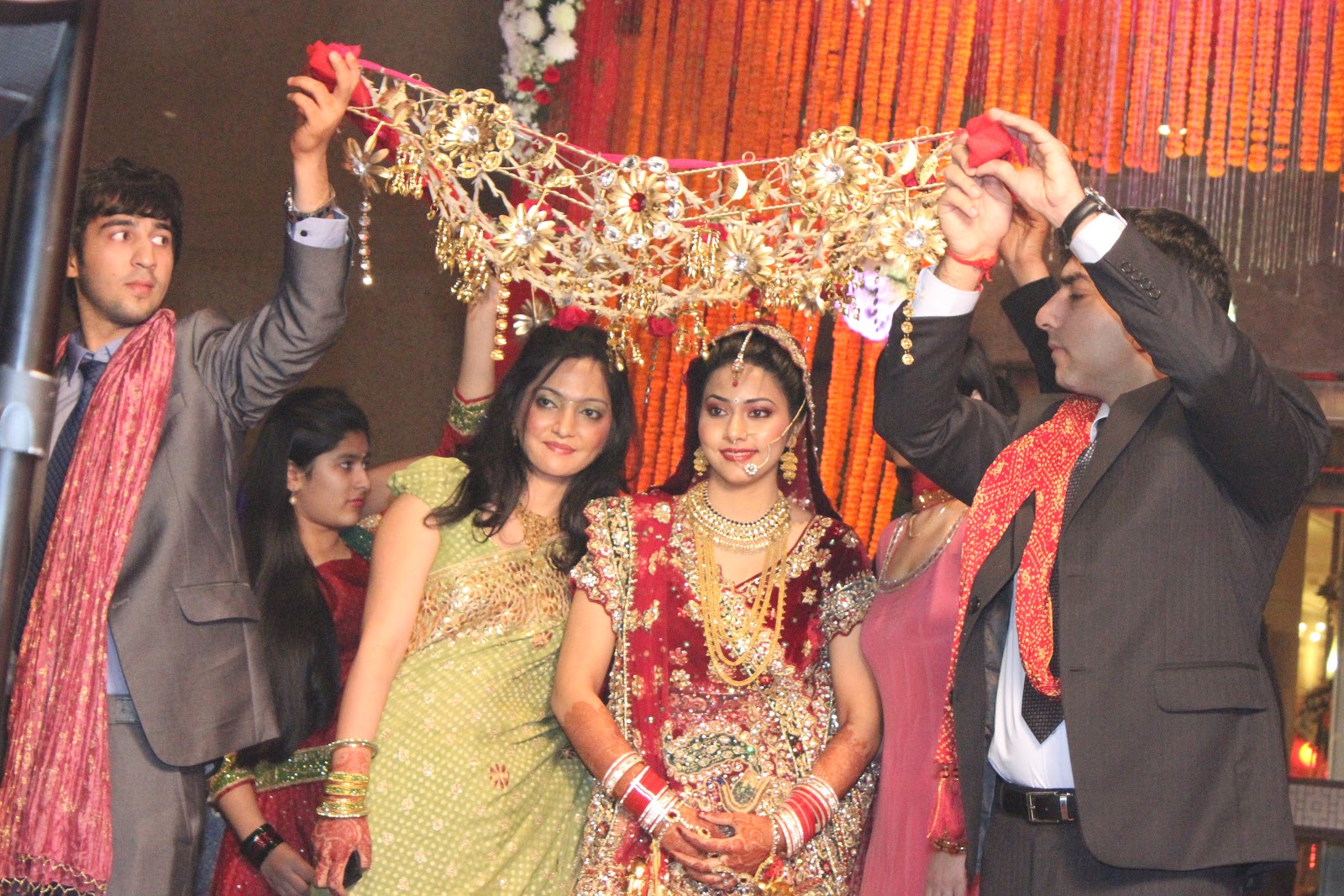

Then the bride made her appearance, walking under what could only be described as an Indian hupa. As she walked in, we followed with our cameras, and then the bridegroom’s family invited us in to continue our picture taking. The served us mango juice, and allowed us to mingle. Ann, of course, got lots of stories, and found one guy who will be in the DC area next week. We may have a dinner guest. I got as close as I could to get wedding photos. Michael Kress I’m not. I did get one good one, though, when I was able to take advantage of the professional photographer’s lighting.

We are now at Indira Ghandi International, waiting for our delayed flight. We probably won’t have time to wander in London now. :(
Varanasi - Saturday
We came to find out that the so called “birds on the runway” yesterday was really another plane on the runway that we needed to steer clear of.


We were up before dawn to get on the Ganges River to watch the sun rise. There was a thick fog, and we weren’t sure it would lift. We bused as close as we could, and walked the final 1/3 of a mile or so, through the most pitiful collection of beggars one would ever see. Varanasi is the holiest city in India. More than 20,00 people arrive daily, most of whom are here on pilgrimage to bathe in the Ganges. They are obligated to donate to the poor, so the poor come out in droves. We got onto a boat to see the sunrise. No luck. We could barely see the shoreline. There were people bathing, people selling, and at one place they were cremating their dead. That is the other thing about this place: you come here to die and be cremated on the Ganges and have your ashes spread in the river. We did not see anyone without clothes walking the streets (they do that here, also).

Later on in the day, we had an introduction to Buddhism. We went to a town outside of Varanasi called Sarnath, which was the birthplace of Buddhism. Buddha was not born here, but studied and meditated here to come up with his 8 fold path to enlightenment. There was an archeological park where old Buddhist temples had been dating to the 10th century. There were lots of Japanese and other Indian Buddhists who were making pilgrimages to this site, and they were just as fascinated by us as we were with them. Everyone wanted a picture with the other “other”. It was very cute to see everyone laughing about it. We also went into an archeological museum that had early artifacts. There were no paintings or anything that could be affected by light, but we were not allowed to take any pictures of the statues.

At the end of the afternoon, we went back to the Ganges for another boat ride. THIS was a trip. The few million people that were still sleeping early in the morning were now out on the street. There were cars, cabs, motorcycles, cows, pedestrians, and busses. We got as far as we could by bus, then piled into bicycle pedicabs, with two people in each one, to take us down to the river. At one point, the mass of people was so great, that a cop didn’t want to let us pass. Ritu had some magic for the policeman, and suddenly the way opened. We got to the river, and now that the fog had lifted from the morning, we saw that the width of the river was only a few hundred yards. We hadn’t been able to see anything earlier. We got on the boats and went upriver to a funeral site. There were at least 8 bodies burning, and a few more that were lit as we watched. It is very holy to be cremated by the Ganges, and even others have their ashes dumped into a river that flows into the Ganges. Hindus believe that if their ashes can be placed in the Ganges they will be released from the cycle of birth and rebirth and their soul will be able to rest in peace. After sunset, we came back to our starting place for the evening ceremony. This has been done daily for the last 2800 years. There were thousands of observers, not only on the steps, but also the tourists and Indians in boats. They started with blowing of conch shells (“Tekiah”), and then had incense and fiery incantations with multiple bells continually ringing. It was a very impressive show.


After the ceremony we were back on our bicycle rickshaws to get back to the bus. Now there was really a huge night market going on, not only on a few streets as we had seen in Taiwan, but entire neighborhoods. Everybody was on the street and every store was open and everyone was shopping. Again, seeing traffic at this level was enough to make me break out the nitro. Earplugs would have helped, also, as you don’t drive anything here without leaning on the horn. I did see one sign that said “No Horns”, which I thought was a big joke.


We were up before dawn to get on the Ganges River to watch the sun rise. There was a thick fog, and we weren’t sure it would lift. We bused as close as we could, and walked the final 1/3 of a mile or so, through the most pitiful collection of beggars one would ever see. Varanasi is the holiest city in India. More than 20,00 people arrive daily, most of whom are here on pilgrimage to bathe in the Ganges. They are obligated to donate to the poor, so the poor come out in droves. We got onto a boat to see the sunrise. No luck. We could barely see the shoreline. There were people bathing, people selling, and at one place they were cremating their dead. That is the other thing about this place: you come here to die and be cremated on the Ganges and have your ashes spread in the river. We did not see anyone without clothes walking the streets (they do that here, also).

Later on in the day, we had an introduction to Buddhism. We went to a town outside of Varanasi called Sarnath, which was the birthplace of Buddhism. Buddha was not born here, but studied and meditated here to come up with his 8 fold path to enlightenment. There was an archeological park where old Buddhist temples had been dating to the 10th century. There were lots of Japanese and other Indian Buddhists who were making pilgrimages to this site, and they were just as fascinated by us as we were with them. Everyone wanted a picture with the other “other”. It was very cute to see everyone laughing about it. We also went into an archeological museum that had early artifacts. There were no paintings or anything that could be affected by light, but we were not allowed to take any pictures of the statues.

At the end of the afternoon, we went back to the Ganges for another boat ride. THIS was a trip. The few million people that were still sleeping early in the morning were now out on the street. There were cars, cabs, motorcycles, cows, pedestrians, and busses. We got as far as we could by bus, then piled into bicycle pedicabs, with two people in each one, to take us down to the river. At one point, the mass of people was so great, that a cop didn’t want to let us pass. Ritu had some magic for the policeman, and suddenly the way opened. We got to the river, and now that the fog had lifted from the morning, we saw that the width of the river was only a few hundred yards. We hadn’t been able to see anything earlier. We got on the boats and went upriver to a funeral site. There were at least 8 bodies burning, and a few more that were lit as we watched. It is very holy to be cremated by the Ganges, and even others have their ashes dumped into a river that flows into the Ganges. Hindus believe that if their ashes can be placed in the Ganges they will be released from the cycle of birth and rebirth and their soul will be able to rest in peace. After sunset, we came back to our starting place for the evening ceremony. This has been done daily for the last 2800 years. There were thousands of observers, not only on the steps, but also the tourists and Indians in boats. They started with blowing of conch shells (“Tekiah”), and then had incense and fiery incantations with multiple bells continually ringing. It was a very impressive show.


After the ceremony we were back on our bicycle rickshaws to get back to the bus. Now there was really a huge night market going on, not only on a few streets as we had seen in Taiwan, but entire neighborhoods. Everybody was on the street and every store was open and everyone was shopping. Again, seeing traffic at this level was enough to make me break out the nitro. Earplugs would have helped, also, as you don’t drive anything here without leaning on the horn. I did see one sign that said “No Horns”, which I thought was a big joke.
Friday, November 18, 2011
Friday to Varanasi
A very late start today as we had a 11:00 plane to Varanasi. Ann got her outfit which actually looks nice. But then it turned into a 1:00 plane. We took off finally at 3:15. It was a short flight of only 45 minutes. It did, however, take 10 minutes longer as the pilot seemed to overshoot the runway as we were landing, and pulled up to circle around and do it again. They said there were “birds on the runway”, but we weren’t so sure.
Because we got in so late, we will not do the river cruise for sunset on the Ganges tonight, but will do it at the end of the day tomorrow. This does seem like a cleaner city than the rest of India. There is still some trash in the street, but significantly less so. However, it doesn’t make the air any cleaner.
Because we got in so late, we will not do the river cruise for sunset on the Ganges tonight, but will do it at the end of the day tomorrow. This does seem like a cleaner city than the rest of India. There is still some trash in the street, but significantly less so. However, it doesn’t make the air any cleaner.
Thursday Night Dancing
A dancing show tonight of local folk dances by “professional dancers” in quaint native costumes. I had a reasonable nap, and Ann enjoyed it. While waiting for dinner, Ann wandered into a fabric shop in the lobby of the hotel. Now we have a new outfit being made overnight for delivery in the morning.
Thursday, November 17, 2011
Khajuraho & The Kama Sutra
Easy morning to the temples at Khajuraho. The eastern part of the city has a number of Jainist temples. Jainism is an outgrowth of Hinduism. Even though they have no deity, they respect and honor the Hindu gods. The Jains have had 24 Prophets who they revere. They wish no harm to any living thing, so not only are they vegetarians, they eat no root vegetables, so as to not injure any ants or other living thing by pulling out a root.

Then to the western side, which was more concentrated on Hinduism. This aspect of Hinduism respects the ascent to Nirvana through love and physical union. The temples were beautifully constructed, with multiple intricate friezes indicating people in many aspects of life, including sexual positions. We will not post photos that may get us banned from Blogspot, but we can share photos with anyone who asks at an appropriate time.
The other thing I have been doing is watching television here in India. Not just any television, but the national sport here, Cricket. I can’t say I fully understand this game, but it certainly is getting closer. There is a series of 1 day matches between Australia, South Africa, Pakistan, Britain and others. The scoring is weird, with a lot of offense and very little defense. The fielders do not use gloves to catch, and batters keep hitting and hitting. An “out” is relatively rare.
-One of the things that has been an ongoing source of discussion on this trip is trash which is everywhere on the streets in India Whether in Dehli or driving through rural towns and areas, the trash has been everywhere and pigs, cows, dogs and other animals are often in the middle of the trash piles picking through them. Even at the fancy hotels, the trash is not kept in dumpsters. I was walking the property of our Taj Hotel in Ranthambhore the other day and ended up behind the area designated for the public and came upon the area where the trash is kept. It is just dumped in an open area with a concrete wall only on one side. As I approached the area, a dozen monkeys appeared and stopped rifling through the trash to gawk at me. It was quite amusing to see them sit on the wall with their legs and arms crossed in front of them trying to figure out who or what I was. But, the real point of all of this, apart from the cute monkeys, is that there does not appear to be an effective system of trash containment and removal. The actual grounds of the Taj Mahal and those of the Khajuraho temples were absolutely pristine, but the areas surrounding them still had plenty of trash. Khajuraho has been cleaner than most other places we have visited, but not up to the kind of cleanliness we take for granted at home. AHS

Then to the western side, which was more concentrated on Hinduism. This aspect of Hinduism respects the ascent to Nirvana through love and physical union. The temples were beautifully constructed, with multiple intricate friezes indicating people in many aspects of life, including sexual positions. We will not post photos that may get us banned from Blogspot, but we can share photos with anyone who asks at an appropriate time.
The other thing I have been doing is watching television here in India. Not just any television, but the national sport here, Cricket. I can’t say I fully understand this game, but it certainly is getting closer. There is a series of 1 day matches between Australia, South Africa, Pakistan, Britain and others. The scoring is weird, with a lot of offense and very little defense. The fielders do not use gloves to catch, and batters keep hitting and hitting. An “out” is relatively rare.
-One of the things that has been an ongoing source of discussion on this trip is trash which is everywhere on the streets in India Whether in Dehli or driving through rural towns and areas, the trash has been everywhere and pigs, cows, dogs and other animals are often in the middle of the trash piles picking through them. Even at the fancy hotels, the trash is not kept in dumpsters. I was walking the property of our Taj Hotel in Ranthambhore the other day and ended up behind the area designated for the public and came upon the area where the trash is kept. It is just dumped in an open area with a concrete wall only on one side. As I approached the area, a dozen monkeys appeared and stopped rifling through the trash to gawk at me. It was quite amusing to see them sit on the wall with their legs and arms crossed in front of them trying to figure out who or what I was. But, the real point of all of this, apart from the cute monkeys, is that there does not appear to be an effective system of trash containment and removal. The actual grounds of the Taj Mahal and those of the Khajuraho temples were absolutely pristine, but the areas surrounding them still had plenty of trash. Khajuraho has been cleaner than most other places we have visited, but not up to the kind of cleanliness we take for granted at home. AHS
Wednesday -> On the Road Again
First a 2 hour train ride from Agra to Jhainsi, where we loaded into a new bus for more driving. Other than watching the monkeys, rats and other critters on the track as we were waiting, there was not much to report. We have been impressed not only by the numbers of beggars, but by the physical maladies they have. There are a lot of amputees here. There are a lot of people who have other physical malformations. There are too many to be as a result of infamy a la Slumdog Millionaire, but I don’t know.
The bus took us to the little town of Orchho, where there are shrines to various maharajas. The river there is mystical. While there, we watched a parade of worshippers on their way to the river for a ceremony. On our way out of town, the air conditioning stops and smoke began to pour from the bottom of the bus. We stopped and the driver and bus boy determined that the belt had broken. We had a choice of going back to Jhansi or proceeding, and we decided to push on. So we got more of a taste of Indian life by driving the next 2 ½ hours to a rest stop without air conditioning. The day was warm, but not too hot, so it really wasn’t too unpleasant. The problem was the patches of unpaved/minimally paved road where the bus put up huge dust clouds. All we really needed to approximate an Indian bus ride was an additional 100 people on the bus. Their busses are Very crowded. People are often sitting on top as there is no room to stand inside.
At the rest stop, the driver and busboy took to changing the belt for the air conditioner. It took an hour, and I was impressed that the a/c motor was held in place and the belt was tightened by a connector very similar to what I use in the OR for an External Fixator device. Mechanics is mechanics….
We piled back on to the now-air conditioned bus for another 5 hours to Khajuraho. This is a place that Paul has not seen, and he is jealous.
The bus took us to the little town of Orchho, where there are shrines to various maharajas. The river there is mystical. While there, we watched a parade of worshippers on their way to the river for a ceremony. On our way out of town, the air conditioning stops and smoke began to pour from the bottom of the bus. We stopped and the driver and bus boy determined that the belt had broken. We had a choice of going back to Jhansi or proceeding, and we decided to push on. So we got more of a taste of Indian life by driving the next 2 ½ hours to a rest stop without air conditioning. The day was warm, but not too hot, so it really wasn’t too unpleasant. The problem was the patches of unpaved/minimally paved road where the bus put up huge dust clouds. All we really needed to approximate an Indian bus ride was an additional 100 people on the bus. Their busses are Very crowded. People are often sitting on top as there is no room to stand inside.
At the rest stop, the driver and busboy took to changing the belt for the air conditioner. It took an hour, and I was impressed that the a/c motor was held in place and the belt was tightened by a connector very similar to what I use in the OR for an External Fixator device. Mechanics is mechanics….
We piled back on to the now-air conditioned bus for another 5 hours to Khajuraho. This is a place that Paul has not seen, and he is jealous.
Tuesday, November 15, 2011
Agra Tuesday

We went from there to the “Baby Taj”, or the Itimad-Ul-Daulah. This is the mausoleum to Mumtaz’s grandfather, who had come from Persia. He had been Prime Minister to an earlier Mughal emperor. The inlaid marble here was also fascinating, and there were rooms for the whole family, including brothers, wives, nieces and nephews. I think there were 12 in all. It was built in the 1620’s, 10-15 years before the Taj.

Lunch was in a private home of a local gem merchant and antiques dealer, Vrakash Lall and his wife, Nighi. Similar to the author of “India Calling”, he was born here but raised in New York. He returned in 1992 to go into the family business. The house has been in his family for about 100 years or more, as it was originally owned by his great grandfather. The property has since been subdivided, but only to cousins, who have houses next door and in the back. He and his wife had an arranged marriage, after the families agreed that it would be a good match. It was only then that they met and had a few meetings to see if the might be compatible. She said that either could have said no with no loss of face, but I’m not really sure of that. She said it was certainly preferable to a “love marriage”. She proceeded to give us a cooking demonstration of making Puri (a type of bread), Paneer (home made cottage cheese similar to Ricotta) and Kassa Paneer, a tomato based sauce with the paneer and lots of wonderful spices – ginger, cardamom, cumin, coriander, turmeric and others- which was served with the Puri. Very tasty. The rest of lunch was lots of other veggies. She and Ann exchanged cauliflower recipes.
We passed on the marble factory and store.
Tomorrow, we have a 2 ½ hour train to lunch, followed by a 4 hour bus. Blecch. We are going, however, south along the Yamuna River to the state of Madhya Pradesh and the city of Khajuraho: the city of temples devoted to Kama Sutra.
-While Steve was catching up on the blog, I went shopping with the two couples - Ed and Fran & Sal and Edie that we have been hanging out with. We had been told earlier in the day by our tour guide that the best place to walk was down the street to the right of our hotel. After stopping to check out the first store, we headed down the street. What an unmitigated disaster trying to even get a block away. There is precious little room between where the cars, pedicabs and motorcycles drive, the cows and water buffalo walk and where pedestrians might be able to make their way. We walked as far from the road as possible, walking in and out of parked cars, single file, but one of the pedicab drivers kept following us to try to get us in his vehicle. It wasn’t enough to follow us in his pedicab, every couple of feet, he got out of his vehicle to bother us again. In addition, the incessant honking and smells of cow shit were enough to do me in. I was reminded of the continually playing video of Mumbai traffic that surrounded the India crafts exhibit at the Kenned y Center last march. It was truly accurate! We finally turned around and headed back to the quiet of the hotel, and sure enough the same pedicab driver turned around as well and continued to harass us. We did not get rid of him until we turned into the gate of our hotel. So much for checking out the streets of Agra! AHS
The other medical thing to report is the cold going around the group. Ann is now the one with the sniffles, having gone through 4 boxes of Kleenex today! She is impressing everyone with her sneezes, but I am used to it. I suppose I'll be the next with the cold.
Monday to Agra
Another 4 1/2 hour bus ride to Agra. We have left the State of Rajasthan, and have moved on to Uttar Pradesh, somewhat to the east. This seems also to be an agricultural area, but perhaps less prosperous. The towns we pass through along the road seem to have less “oomph’, if that’s possible. We got to Agra which is a more major city, but still not among the biggest in India. Think Baltimore or Cleveland. Still, it’s 3 ½ million people.
 We stopped at the hotel and then back on the bus to the Agra Fort. This was built beginning in 1565 by the Moghul emperors, starting with Akhbar and then by his grandson, Shah Jahan. It was also a palace of palatial proportions. The problem was, due to palace intrigue, Shah Jahan, who built the Taj Mahal, was eventually imprisoned there by his younger son, Aurangzeb, who had usurped power by beheading his older brother and killing his nephew in order to seize power. Other than that, it was a nice place. There was a wonderful view of the Taj Mahal, about a mile down the river. We were there as the sun was setting, and the pink colors were wonderful.
We went out after we got back to go to the ATM. On this tour, this becomes a major production, as they really didn’t want us walking the roads. So the bus drove us 2 blocks to an ATM and the bus driver and bus boy were waiting for us. Of course, this is India, so the ATM only worked for one of the 4 of us. The machines are in Hindi or English, so there was no real explanation of why we were rejected. We walked around the corner to try a different machine where another 2 of us were successful. Poor John, who couldn’t get his card to work. He took the bus back, and Sheldon & Ed & I decided to walk back to the hotel. Sheldon had to buy some batteries for his camera, but they wanted an exorbitant price and wouldn’t bargain. We walked back the 2 blocks, dodging bicycles, motorcycles, the occasional cow, and cars going both ways on the same side of the street. It was what I would have expected from India, but Ed felt we had taken his life in our hands. C’est la guerre.

We went out after we got back to go to the ATM. On this tour, this becomes a major production, as they really didn’t want us walking the roads. So the bus drove us 2 blocks to an ATM and the bus driver and bus boy were waiting for us. Of course, this is India, so the ATM only worked for one of the 4 of us. The machines are in Hindi or English, so there was no real explanation of why we were rejected. We walked around the corner to try a different machine where another 2 of us were successful. Poor John, who couldn’t get his card to work. He took the bus back, and Sheldon & Ed & I decided to walk back to the hotel. Sheldon had to buy some batteries for his camera, but they wanted an exorbitant price and wouldn’t bargain. We walked back the 2 blocks, dodging bicycles, motorcycles, the occasional cow, and cars going both ways on the same side of the street. It was what I would have expected from India, but Ed felt we had taken his life in our hands. C’est la guerre.
Monday, November 14, 2011
Sunday to Dera Village
Another 4 ½ hour bus ride. However, I lied before when I said the previous roads were terrible. This was the worst, for about 1 hour, it was nothing but ruts, sand, dust and the crazy traffic. We finally got onto a real highway for about another hour, then got off again to go onto worse and worse roads. When the road stopped, we climbed out and got into jeeps to go on the dirt road for about 2 miles to a little village in the middle of nowhere. They have a “resort” here for us of little cabins. The first one we went into had an overwhelming odor of fumigation. I almost barfed. We moved to another cabin where the smell is only slightly obnoxious. After an afternoon on the lawn playing Cricket and having tea, we took a camel ride to a tiny village. There are 12 families in the village with what looked like 1 house with electricity. There were about 100 people and lots of goats, cows, and a few chickens. The men greeted us with a ceremony with music and dancing. He got us up to dance and proceeded to do what most of us thought was a hora. We went in a circle holding hands, and then went to the center. If they had put someone on a chair, I would have thought we had found a lost tribe. They showed us the houses and the women preparing the food. The women were crushing peppers and garlic and basil by hand on a stone. By and large, they were friendly and smiling, but the young girls were somewhat reluctant.
Ranthambhore Saturday – Still on the Tiger Hunt
We were up early to go back to the park. I had texted an early Shabbat greeting to our kids (6:00am Saturday here, 4:30pm Friday West coast, 7:30 pm East Coast). Paul texted back, “May Shiva bless you and keep you; May Vishnu shine his countenance upon you; and May Ganesh bless you and grant you peace.”
Our crowd is thinning, as some have Delhi Belly, and some don’t like the bouncy jarring nature of the jeep ride. Our naturalist described it as a “complimentary massage”. This time, the park police actually checked our passports to be sure they knew who was going in. I’m not exactly sure why, but that is what they do here. Of course, more hawkers at the gate while we waited. We went to a different area of the park this morning. Again, we saw a number of species including more monkeys, deer and peacocks. We saw a fairly fresh tiger paw print in the dust of the road, but still no tiger. We did get a somewhat slow start into the park, as our Trip Guide, Ritu, had an asthma attack on the way in, and we had to backtrack to get her out. There are 2 other docs on the trip, one with an epi pen, so I just showed up for moral support. WTF do I know about asthma, anyway??? I am really hoping to see a real tiger here, not just on a tshirt.
 Breakfast was late after our return, and then the women went into town for more shopping. I can pass on that. We have a few hours until lunch, and then for our final foray into the park.
The third trip into the park was more of the same. We saw no tiger. We saw no tiger tracks or droppings. One of the guides showed us a video he took of the tiger killing a baby deer. Oh well. We saw lots of monkeys and monkey babies. There is a talk tonight about tigers. If I know anything about this country, they will try to sell us the video afterwards. But, I suppose, it’s no worse than PBS.

At dinner, other groups told us of their wonderful tiger sightings. The tiger sat in the middle of the road for them. The tiger walked around. She did almost everything except sing and dance. What she didn’t do is read her schedule and know to come to the areas where other groups were. I dunno, these tigers need better training.
Our crowd is thinning, as some have Delhi Belly, and some don’t like the bouncy jarring nature of the jeep ride. Our naturalist described it as a “complimentary massage”. This time, the park police actually checked our passports to be sure they knew who was going in. I’m not exactly sure why, but that is what they do here. Of course, more hawkers at the gate while we waited. We went to a different area of the park this morning. Again, we saw a number of species including more monkeys, deer and peacocks. We saw a fairly fresh tiger paw print in the dust of the road, but still no tiger. We did get a somewhat slow start into the park, as our Trip Guide, Ritu, had an asthma attack on the way in, and we had to backtrack to get her out. There are 2 other docs on the trip, one with an epi pen, so I just showed up for moral support. WTF do I know about asthma, anyway??? I am really hoping to see a real tiger here, not just on a tshirt.

The third trip into the park was more of the same. We saw no tiger. We saw no tiger tracks or droppings. One of the guides showed us a video he took of the tiger killing a baby deer. Oh well. We saw lots of monkeys and monkey babies. There is a talk tonight about tigers. If I know anything about this country, they will try to sell us the video afterwards. But, I suppose, it’s no worse than PBS.

At dinner, other groups told us of their wonderful tiger sightings. The tiger sat in the middle of the road for them. The tiger walked around. She did almost everything except sing and dance. What she didn’t do is read her schedule and know to come to the areas where other groups were. I dunno, these tigers need better training.
Ranthambhore –Friday – Tiger Hunting
We piled on the bus this morning for a drive to the tiger preserve at Ranthambhore. By the map, it’s about 100 miles. It took us 5 hours. Welcome to India. The “highway” was 2 lanes at best, but this time with goat jams instead of camel jams. The road itself would rate as a “back road” at home, often not paved for ¼ mile or more.
We made our way through the town of Sawai Madhopur to our lodge. This, of course, is a world apart from what is inside our gate. Quiet, grass, palm trees, etc. Here in India, WE are the 1%. We are probably the 0.1% After lunch, we piled into large jeeps and went into the park. The Government has strict controls of who goes in, and they required us to carry our passports. We had to sign a waiver (for damages/tiger injuries/ etc.) before they would let us in. I commented to our group that if we were being chased by a tiger, the tip was not necessarily to outrun the tiger, but to outrun your buddy.


Dinner was more Indian food. It does get a little monotonous. I could kill for a burger. When I was sick back in Jaipur, I made the mistake of asking for plain sautéed chicken. They had no idea what I was talking about. When I mentioned at the reception desk at checkout that perhaps they could learn to cater to western stomachs for a very common problem, they thought I was making a real complaint and worried that I wasn’t satisfied and even got a manager to speak with me. It wasn’t worth the trouble to bring it up. As they say, no good deed goes unpunished.
-I actually don’t share Steve’s frustration with the food and have been quite enjoying it. The vegetarian options are delicious and the lack of meat at some meals doesn’t bother me in the least. In Delhi and Jaipur, we had a variety of delicious cauliflower, okra and eggplant dishes. Pushkar was entirely vegetarian so Steve wasn’t too happy. Here in Ranthambhore, there have been meat dishes at every meal in addition to the vegetarian ones. The cauliflower has been replaced by a variety of potato dishes and there continue to be very good eggplant and okra dishes. So far, we have been traveling in Delhi (which is its own state and the state of Rajisthan. It will be interesting to see how the food changes when we visit other areas of the country. AHS
Walking back to our room at this lodge brought back feelings of Maine. The air is cool, the trees give off a great scent (not incense), and the sky is cloudless with a big bright moon. That is, until the bugs started getting to me. Well, maybe that’s Maine, too. I have since moved inside.
We made our way through the town of Sawai Madhopur to our lodge. This, of course, is a world apart from what is inside our gate. Quiet, grass, palm trees, etc. Here in India, WE are the 1%. We are probably the 0.1% After lunch, we piled into large jeeps and went into the park. The Government has strict controls of who goes in, and they required us to carry our passports. We had to sign a waiver (for damages/tiger injuries/ etc.) before they would let us in. I commented to our group that if we were being chased by a tiger, the tip was not necessarily to outrun the tiger, but to outrun your buddy.

The park itself is the remnant of an old fort and then a Maharajah’s hunting ground. We went through the gates, and it became green again. Ann noticed there was no trash, either. There was the remnants of an old mosque from the 1500’s that had never been rebuilt or completely destroyed. We came upon a crocodile first, snoozing in the sun. Then came the Langur monkeys hanging out to look at us as we looked at them. As we got further into the park, we saw Kingfisher birds, Sandpipers, spotted deer, Sambur Deer and others. Did we see a tiger? Well, no actually. The guides say that they listen to the sounds of the other animals to listen for “warning noises” that they use to warn each other. There may have been a tiger in the area, but not right where we were. It was interesting when they stopped the jeep and the guides told everyone to be silent, while we waited. All we heard was the noises of the jungle environment. Sometimes we heard the warning call, and the herd would scatter a little, but no tiger. After a while we moved on and did it again, but still no luck. We have two more forays into the park tomorrow, so we’ll see. One of the other groups had seen a tiger this morning, so there is no truth to the rumor that this is a big scam.

-I actually don’t share Steve’s frustration with the food and have been quite enjoying it. The vegetarian options are delicious and the lack of meat at some meals doesn’t bother me in the least. In Delhi and Jaipur, we had a variety of delicious cauliflower, okra and eggplant dishes. Pushkar was entirely vegetarian so Steve wasn’t too happy. Here in Ranthambhore, there have been meat dishes at every meal in addition to the vegetarian ones. The cauliflower has been replaced by a variety of potato dishes and there continue to be very good eggplant and okra dishes. So far, we have been traveling in Delhi (which is its own state and the state of Rajisthan. It will be interesting to see how the food changes when we visit other areas of the country. AHS
Walking back to our room at this lodge brought back feelings of Maine. The air is cool, the trees give off a great scent (not incense), and the sky is cloudless with a big bright moon. That is, until the bugs started getting to me. Well, maybe that’s Maine, too. I have since moved inside.
Jaipur Dinner
I just returned from our group dinner with a Jaipur family. We ate in the family’s home which is a regal three story structure which they have been occupying continuously since 1752. Currently 21 family members occupy the multigenerational home, with each portion of the family occupying its own so called “apartment”. An apartment is basically a bedroom with a sitting area. The family eats communally in the common dining room. There are no separate kitchen facilities for any of the nuclear families that live in the home. On the walls of the living room are photos dating back generations, illustrating the family’s important relationship with the Maharaja (King) of Jaipur. According to the patriarch of the family, prior to India’s independence, the family served as feudal lords to the Maharaja. When the maharajas lost their power at the time of India’s independence so too did the feudal lords. After that time, all they had left was the house which they continue to occupy. We were given a tour of several of the apartments and of the public meeting room where the head of the family would hear grievances from the members of the community. After the tour, we sat down for dinner accompanied by a daughter of the family and a daughter in law. The daughter of the house , who is 27, was visiting from a town about 6 hours away. She had been married almost a year ago and had gone to live with her husband and his family. At dinner she told us that hers had been an arranged marriage.
Prior to the tour we were served coke and several small hors d’oeurves. Dinner was a typical Indian dinner with a spicy chicken in curry, mustard greens, rice and roti.
A story we had heard earlier at the City Palace, one of the palaces of the Maharaja of Jaipur, intersected with our evening with the aristocratic family. The second to last Maharaja never fathered any children with his queens even though he did father over 60 children with his concubines. His astrologer had told him that if he bore any children with his queens, he would die at the hands of one of those children. Consequently, there were no heirs to the throne. He adopted a boy from an aristocratic family who became the next and last Maharaja. That Maharaja who was kwon as the “Polo King”, as he was an excellent polo player, was a cousin of the gentleman who hosted us in his home in Jaipur.
Prior to the tour we were served coke and several small hors d’oeurves. Dinner was a typical Indian dinner with a spicy chicken in curry, mustard greens, rice and roti.
A story we had heard earlier at the City Palace, one of the palaces of the Maharaja of Jaipur, intersected with our evening with the aristocratic family. The second to last Maharaja never fathered any children with his queens even though he did father over 60 children with his concubines. His astrologer had told him that if he bore any children with his queens, he would die at the hands of one of those children. Consequently, there were no heirs to the throne. He adopted a boy from an aristocratic family who became the next and last Maharaja. That Maharaja who was kwon as the “Polo King”, as he was an excellent polo player, was a cousin of the gentleman who hosted us in his home in Jaipur.
Thursday, November 10, 2011
Jaipur Thursday
Somewhat of a lost day. I woke up not feeling well, and let the group go on without me. Ann will fill in the details of what they did later. I spent my morning sleeping, vegetating, and generally doing nothing useful. I tied to sit in the lobby to read, but a) it was cold, and b) they have an overpowering sandalwood or other incense smell in there, and I couldn’t stand it in my weakened state.
I tried to sit outside on the veranda, but some other tour group was having an event with a marching band and elephant polo. There was an MC who was loud and had a microphone.
I slept for a while, but got too cold there, also, despite the temperature set at 24(75F). I guess I could have set it higher, but Ann would be stifling when she got back. Bah. It looks as if I will not be going out this afternoon, either. Tonight is another “home hospitality” visit. We’ll see if I’m up for that.
So I get to be the “official “ trip blogger today.. We took off by bus this a.m. – no camels or elephants today – to see Birla Temple, a Hindu temple that was built in 1985 by the Birla family, a one of the very wealthy and well established Indian family – Ghandi was living at one of the Birla family homes in Delhi when he was assassinated.
Before we went into the temple, Ritu, our tour guide, gave us a brush up on Hindu theology. Although I thought that Hinduism is a polytheistic religion. I apparently was incorrect. It is based on one god, Paramahtma, which means supreme soul. (Mohandas Ghandi came to be known and revered as Mahtma Ghandi). Below Paramahtma is a trinity of male gods (Brahma, the creator; Vishnu, the preserver; and Shiva the destroyer) and a trinity of female gods (Kali, Saraswai and Lakshmi) who were sent down to create the universe. Although Shiva is thought of as the destroyer, he has a much broader role than just causing destruction. Since the Hindu’s believe in reincarnation, Shiva plays a very important role in keeping balance in the universe by causing living things to die so they can be reincarnated and life can continue in its natural cycle of birth death and rebirth. The Birla Temple is dedicated to Shiva and Kali. There is a sculpture of Shiva outside of the temple and large “dressed” sculptures of Shiva and Kali on the front altar of the Temple. The altar has doors at the front of it which may be opened or closed. Ritu explained that the Shiva and Kali are awakened each morning and dressed in their finery. They each had on beautiful jeweled robes and head dresses. They are “fed” – given offerings by worshippers – and all of the extra food is then given to the poor. At night, they are undressed .
Birla Temple was created with an ecumenical purpose. The Birlas wanted to promote tolerance among different religious groups and acceptance of a wide range of ideas. To that end, there are sculptures of Copernicus, Socrates, Jesus, Moses and Mohammad on the outside columns of the temple.
From the Birla Temple, we headed to a paper factory where paper is made from textile waste. No trees are used in the process. Stores like Home Goods and Barnes and Noble are customers . One of the things we watched being processed was nesting boxes that are destined for Home Goods. I even got a picture of the bar coded price tag with the Home Goods insignia on the box. And of course it stated the original price of the item and the discounted price. I asked our store guide whether she was a manager of production and she relayed that she was not. Her job was to guide the 5-6 tour groups a day which tour the facility. She also shared that the worker earn between 150-300 rupees ($3-$6) per day. We then were guided into the shop where we were able to purchase hand-made paper items such as the package of 6 note cards and envelopes for 100 rupees ($2).
Our next stop was the Blue Pottery Shop where we were given a demonstration how pottery is made which was just like the demonstration Ellen and I had seen in Morocco. We also got another demonstration of block printing on fabric, for which the Indians are very well known. Then on to the shop connected with the operation for more shopping where I bought an Indian top which Steve commented looks hippyish when he saw it.
At that point we had the choice to return to the hotel or have an hour shopping in the local bazaar. I opted for shopping with the two California couples we have been hanging out with. Edie, Fran and I decided that there are strength in numbers and we had a great time bargaining for scarves and buying bangles together. Always the negotiator, I was able to get the vendor to come down almost 50% on his originally quoted price on the scarves. –AHS
So everybody is out for dinner and I am left behind trying to get better. There are 1 or 2 others who are in the same situation as me. Rice & toast for dinner…
Tomorrow is a 4 hour bus the Ranthambore National Park for tiger hunting/photos. I’m told there are only 38 tigers in the park, so we’ll see if there is any actual viewing. Internet access may be spotty, so bear with us until perhaps the 14th when we get to Agra.
-I just returned from our group dinner with a Jaipur family. We ate in the family’s home which is a regal three story structure which they have been occupying continuously since 1752. Currently 21 family members occupy the multigenerational home, with each portion of the family occupying its own so called “apartment”. An apartment is basically a bedroom with a sitting area. The family eats communally in the common dining room. There are no separate kitchen facilities for any of the nuclear families that live in the home. On the walls of the living room are photos dating back generations, illustrating the family’s important relationship with the Maharaja (King) of Jaipur. According to the patriarch of the family, prior to India’s independence, the family served as feudal lords to the Maharaja. When the maharajas lost their power at the time of India’s independence so too did the feudal lords. After that time, all they had left was the house which they continue to occupy. We were given a tour of several of the apartments and of the public meeting room where the head of the family would hear grievances from the members of the community. After the tour, we sat down for dinner accompanied by a daughter of the family and a daughter in law. More details about the dinner to be continued later. AHS
I tried to sit outside on the veranda, but some other tour group was having an event with a marching band and elephant polo. There was an MC who was loud and had a microphone.
I slept for a while, but got too cold there, also, despite the temperature set at 24(75F). I guess I could have set it higher, but Ann would be stifling when she got back. Bah. It looks as if I will not be going out this afternoon, either. Tonight is another “home hospitality” visit. We’ll see if I’m up for that.
So I get to be the “official “ trip blogger today.. We took off by bus this a.m. – no camels or elephants today – to see Birla Temple, a Hindu temple that was built in 1985 by the Birla family, a one of the very wealthy and well established Indian family – Ghandi was living at one of the Birla family homes in Delhi when he was assassinated.
Before we went into the temple, Ritu, our tour guide, gave us a brush up on Hindu theology. Although I thought that Hinduism is a polytheistic religion. I apparently was incorrect. It is based on one god, Paramahtma, which means supreme soul. (Mohandas Ghandi came to be known and revered as Mahtma Ghandi). Below Paramahtma is a trinity of male gods (Brahma, the creator; Vishnu, the preserver; and Shiva the destroyer) and a trinity of female gods (Kali, Saraswai and Lakshmi) who were sent down to create the universe. Although Shiva is thought of as the destroyer, he has a much broader role than just causing destruction. Since the Hindu’s believe in reincarnation, Shiva plays a very important role in keeping balance in the universe by causing living things to die so they can be reincarnated and life can continue in its natural cycle of birth death and rebirth. The Birla Temple is dedicated to Shiva and Kali. There is a sculpture of Shiva outside of the temple and large “dressed” sculptures of Shiva and Kali on the front altar of the Temple. The altar has doors at the front of it which may be opened or closed. Ritu explained that the Shiva and Kali are awakened each morning and dressed in their finery. They each had on beautiful jeweled robes and head dresses. They are “fed” – given offerings by worshippers – and all of the extra food is then given to the poor. At night, they are undressed .
Birla Temple was created with an ecumenical purpose. The Birlas wanted to promote tolerance among different religious groups and acceptance of a wide range of ideas. To that end, there are sculptures of Copernicus, Socrates, Jesus, Moses and Mohammad on the outside columns of the temple.
From the Birla Temple, we headed to a paper factory where paper is made from textile waste. No trees are used in the process. Stores like Home Goods and Barnes and Noble are customers . One of the things we watched being processed was nesting boxes that are destined for Home Goods. I even got a picture of the bar coded price tag with the Home Goods insignia on the box. And of course it stated the original price of the item and the discounted price. I asked our store guide whether she was a manager of production and she relayed that she was not. Her job was to guide the 5-6 tour groups a day which tour the facility. She also shared that the worker earn between 150-300 rupees ($3-$6) per day. We then were guided into the shop where we were able to purchase hand-made paper items such as the package of 6 note cards and envelopes for 100 rupees ($2).
Our next stop was the Blue Pottery Shop where we were given a demonstration how pottery is made which was just like the demonstration Ellen and I had seen in Morocco. We also got another demonstration of block printing on fabric, for which the Indians are very well known. Then on to the shop connected with the operation for more shopping where I bought an Indian top which Steve commented looks hippyish when he saw it.
At that point we had the choice to return to the hotel or have an hour shopping in the local bazaar. I opted for shopping with the two California couples we have been hanging out with. Edie, Fran and I decided that there are strength in numbers and we had a great time bargaining for scarves and buying bangles together. Always the negotiator, I was able to get the vendor to come down almost 50% on his originally quoted price on the scarves. –AHS
So everybody is out for dinner and I am left behind trying to get better. There are 1 or 2 others who are in the same situation as me. Rice & toast for dinner…
Tomorrow is a 4 hour bus the Ranthambore National Park for tiger hunting/photos. I’m told there are only 38 tigers in the park, so we’ll see if there is any actual viewing. Internet access may be spotty, so bear with us until perhaps the 14th when we get to Agra.
-I just returned from our group dinner with a Jaipur family. We ate in the family’s home which is a regal three story structure which they have been occupying continuously since 1752. Currently 21 family members occupy the multigenerational home, with each portion of the family occupying its own so called “apartment”. An apartment is basically a bedroom with a sitting area. The family eats communally in the common dining room. There are no separate kitchen facilities for any of the nuclear families that live in the home. On the walls of the living room are photos dating back generations, illustrating the family’s important relationship with the Maharaja (King) of Jaipur. According to the patriarch of the family, prior to India’s independence, the family served as feudal lords to the Maharaja. When the maharajas lost their power at the time of India’s independence so too did the feudal lords. After that time, all they had left was the house which they continue to occupy. We were given a tour of several of the apartments and of the public meeting room where the head of the family would hear grievances from the members of the community. After the tour, we sat down for dinner accompanied by a daughter of the family and a daughter in law. More details about the dinner to be continued later. AHS
Subscribe to:
Posts (Atom)